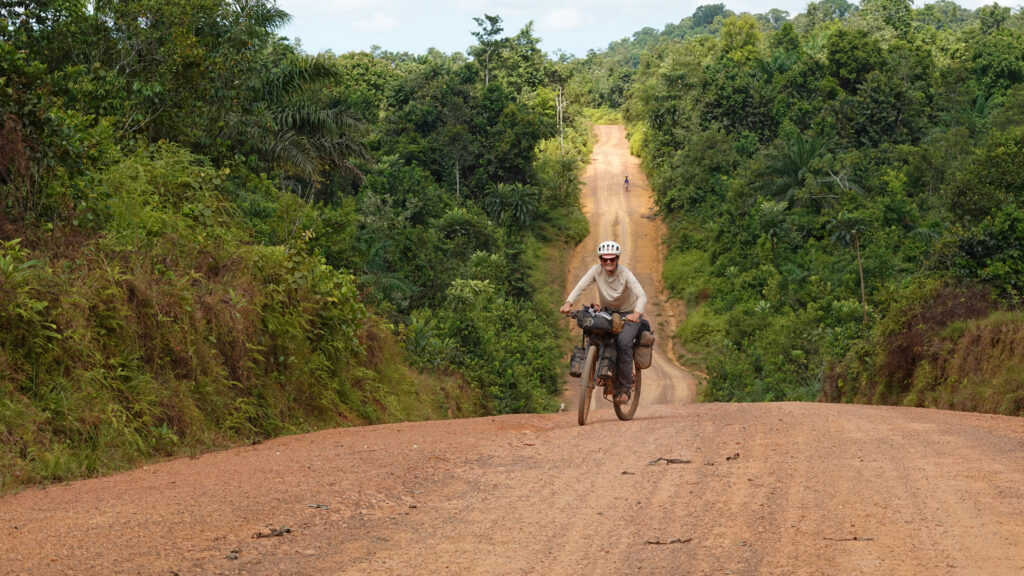
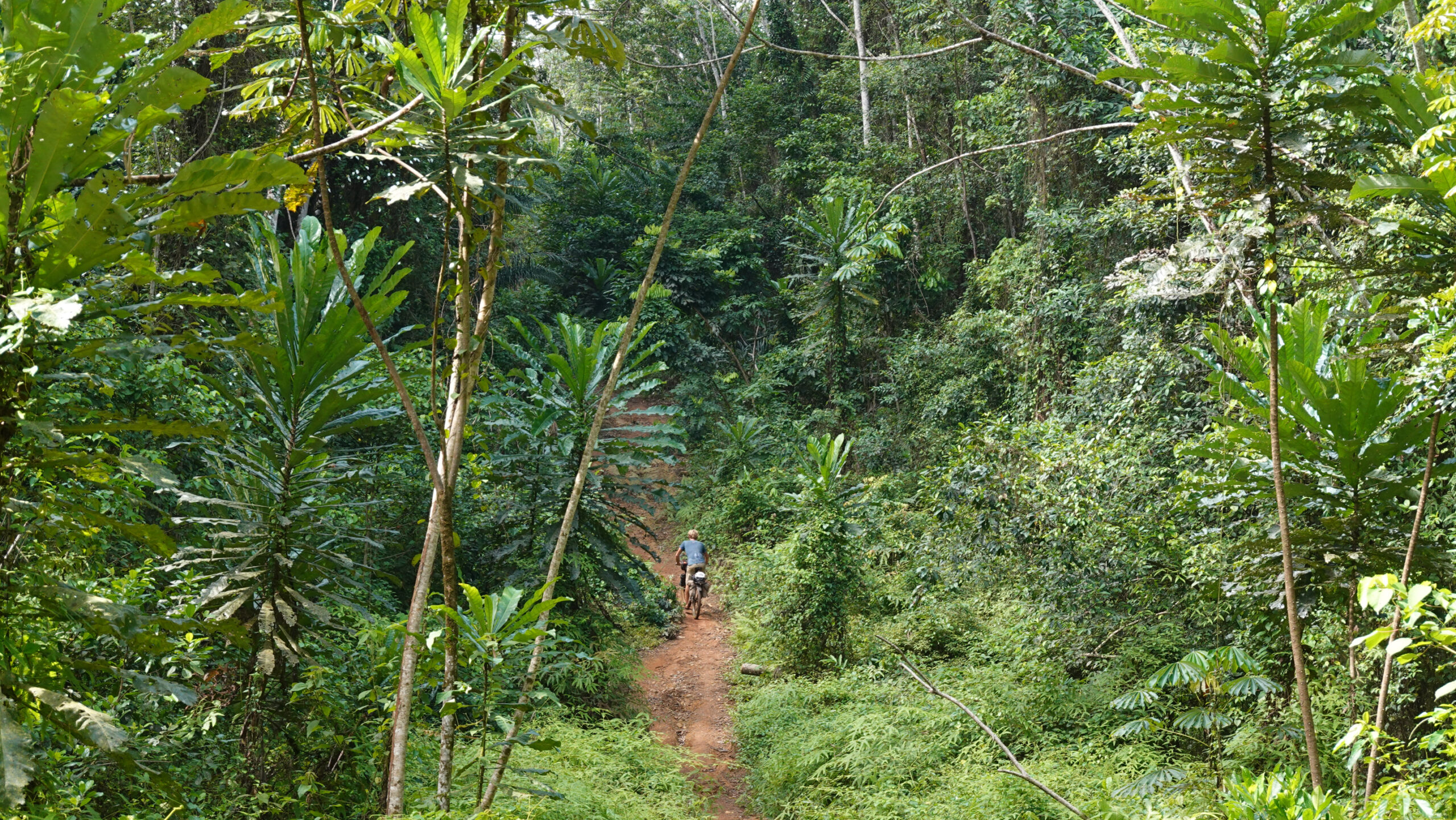
Some of the most intense days we've had since we left the North Cape more than half a year ago took place in the jungles of Liberia. The humid heat, the extreme terrain and wild human destinies made the experience challenging, but to that extent enriching.
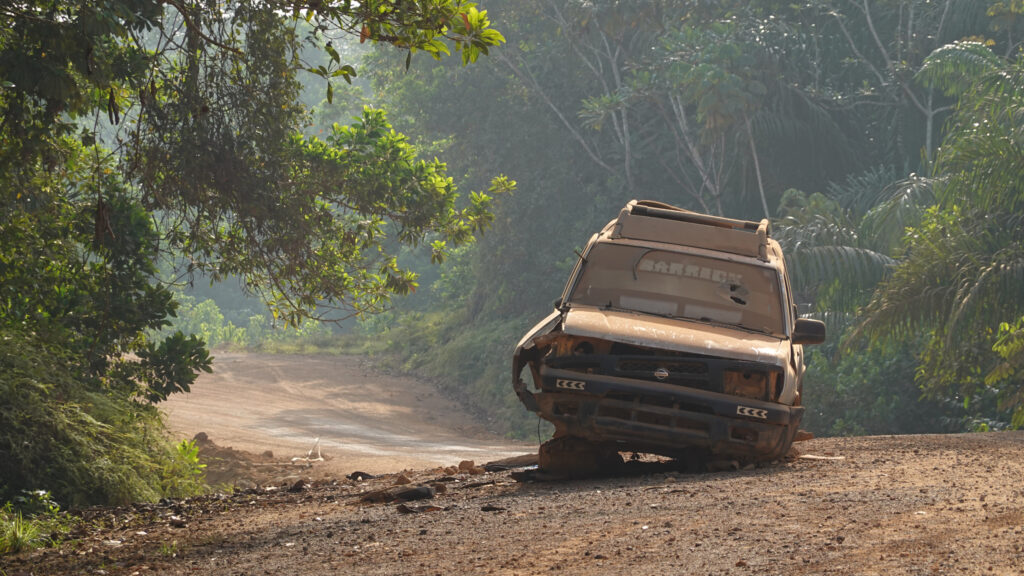
"I don't want you driving through the jungle!".
We've only known the woman for a few minutes as she tries to convince us to take a different route.
“The jungle is not safe. You have to ask the locals and they will tell you which way to drive".
We are only a day's cycling from Monrovia, and have just embarked on a stretch we have been looking forward to immensely; a small dirt road through the rain forest, in the southeast corner of Liberia.
The woman we are talking to owns a small pharmacy and has given us permission to set up the tent behind her house. But she is nervous about our safety. We always listen attentively to advice from the locals, but we also try to filter and translate their concerns. People in West Africa are generally incredibly friendly and concerned about our safety. But we also find that they do not understand our concept of bikepacking and how difficult terrain we can actually tackle on the bikes. We think she is most worried about the many cars that are stuck for days in the mud in the jungle. But soon we will find out that there are also other things at stake.
A sudden awakening
On the second day in the jungle, we ask again in a small village if we can camp. A shady spot under a mango tree is found for us, and the ground is swept and prepared before we can set up the tent.
The next morning we wake up abruptly to the sound of heart-wrenching cries from the women of the town, who are walking through the main street. They shout a mixture of plaintive cries and words that are not songs, but still musical, which we have only experienced in Africa. Sorrow hangs thick in the air. We do not doubt for a second that something terrible has happened. But what?
The owner of the house we are sleeping at comes out to the tent and tells us what has happened:
“A mine has collapsed close to here. There were 7-10 men in the mine when it collapsed on top of them. They are all dead. One was here from the village. That is why the women mourn!”
We are completely stunned. It is a huge tragedy.
The mine is Turkish owned. The men work as day laborers. This means that they have no rights. As a result, there will be no compensation or insurance for the bereaved family. Wife and children now have to find a new way to cope. Probably the kids have to go to work. Possibly they already do.
The woman, whose husband is dead, gets on the back of a motorcycle and drives off to the mine, where he is still buried in the mudslide.
Things on top of the body
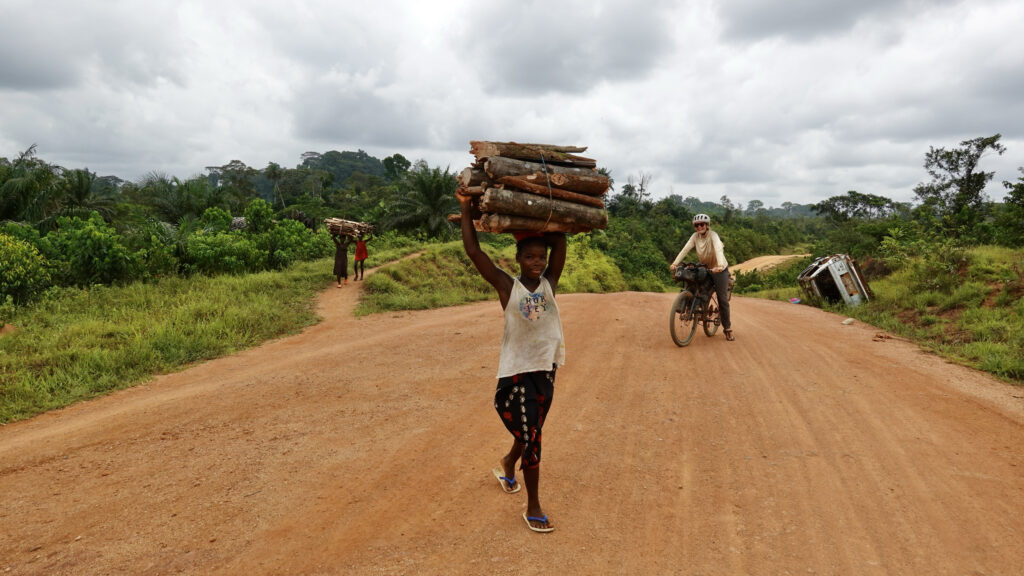
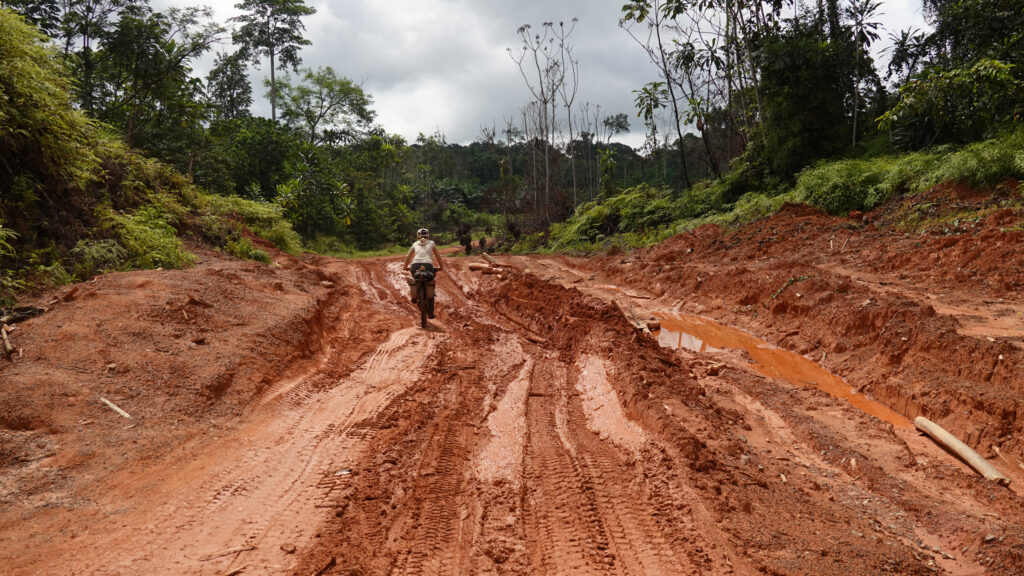
We cycle on a wide red dirt road. The rainforest stands like a dense wall, on both sides of the road. The green wall is completely impenetrable. We have never seen such wild and untamed nature. Everyone we meet has a machete on them. It is just as essential as footwear. Typically, the women carry the machete on top of their heads. We love that they are so into balancing things on top of the body.
At another point we see a walking man carrying a generator on his head! It quickly develops into a scene where we lose both nose and mouth in bewilderment: While the man with the generator is coming towards us, a young guy on a motorbike overtakes us, but he does not hold on to the handlebars, in fact his entire upper body lies backwards on the seat, so he looks straight up in the air! Bladder ass! As he passes the man with the generator, he backslides and accelerates as he spins the grinder. They exchange a few words before the man with the generator jumps on the back of the motorcycle and they drive off. Still with the generator balancing on top of the head!!! We were left wide-eyed as if we had just witnessed a circus act.
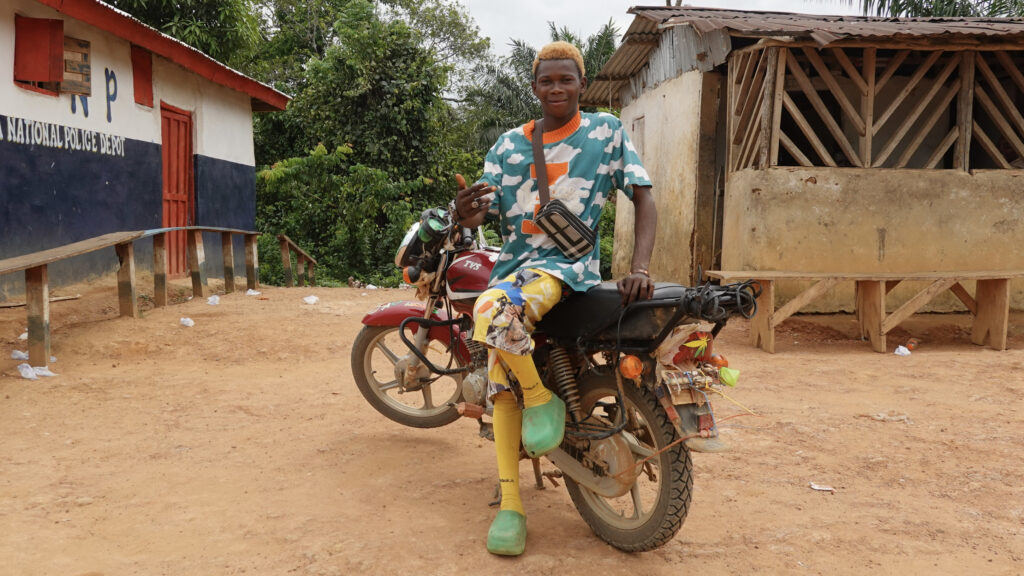
Archangel Martha
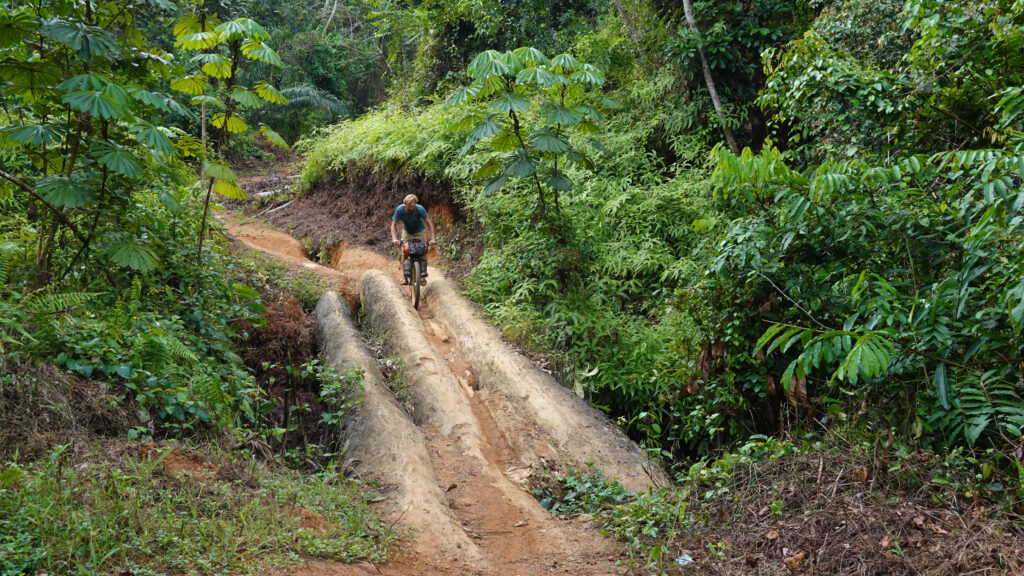
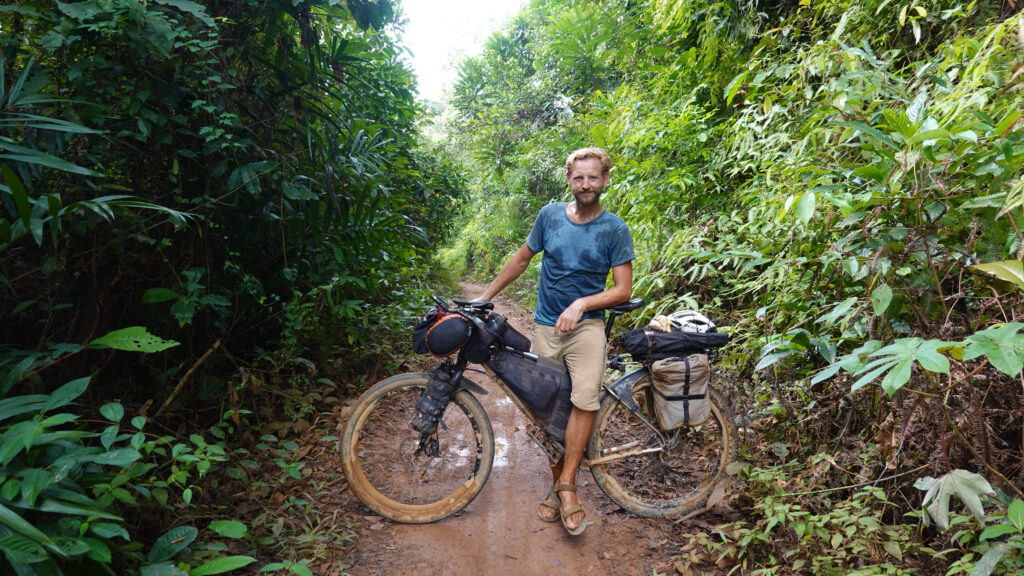
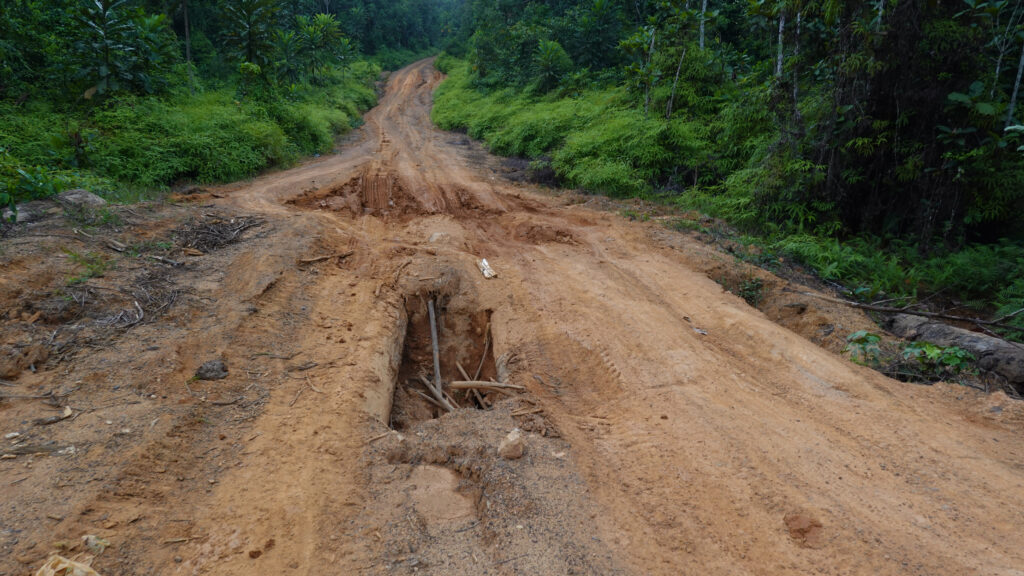
It's day 3 in the jungle. In the afternoon, we are well tendered by the sun, which is completely merciless, here close to the equator. Together with the extremely high humidity, we almost feel like we are suffocating in the heatstroke. It is difficult to keep the energy up and any chance to stand in the shade under a large tree is seized. The sunglasses are greasy with sunscreen, our bodies are speckled with hot spots, all clothes from inside to outside are soaked with sweat. The road is hard to cycle. There aren't many flat stretches, it's all hills. We drive more than 1,000 meters of altitude per day, even though there are no mountains here. And not enough with the altitude, many of the hill valleys are large mud holes, where we can sometimes drive through the muddy morass, sometimes have to get off and push the bikes through. There are a number of "closed" streams under the road. But many of them are not even that closed, because the road surface has been rained away and the support of wooden beams has rotted, so that there can be holes that are up to a few meters deep. It is, to put it mildly, challenging terrain that requires high concentration.
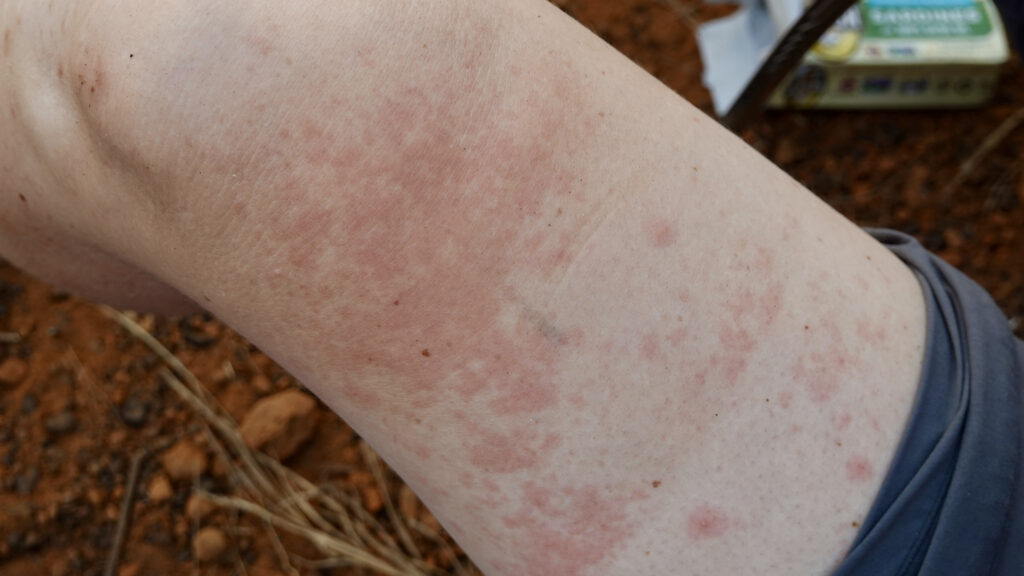
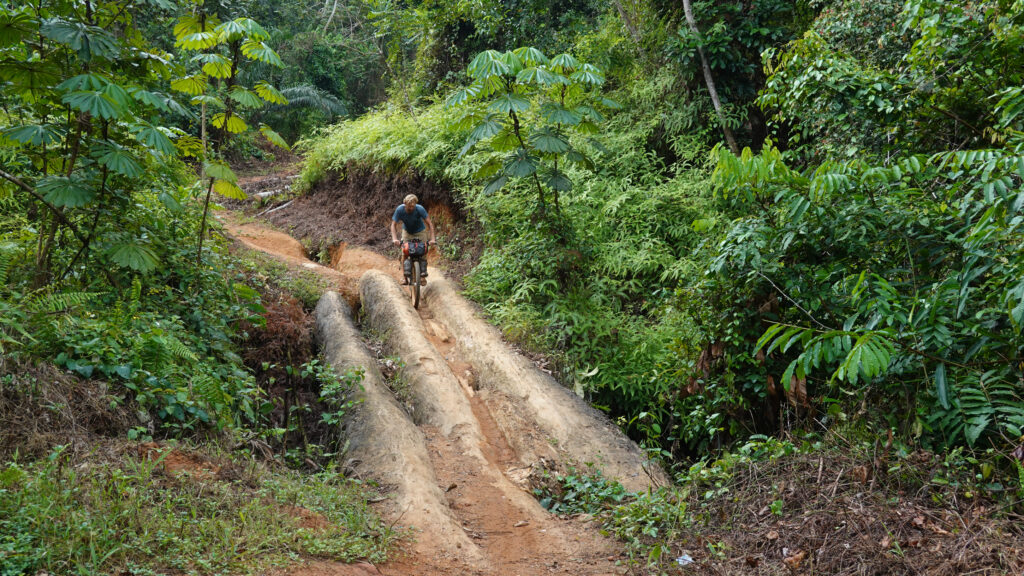
After a long steep descent, at the beginning of a village, Marie's front wheel hits a hidden hole in the road, knocking the bike off course and Marie over the handlebars. It happens in a split second and Marie doesn't even have time to take off. Some of the village's children and women sit nearby, so water is quickly fetched to clean the wounds. We have iodine and plasters so we can clean and close the wounds. There are many cuts and scrapes on the legs, but none of them are serious. Marie has also had pressure in her chest, so when one of the women offers that we can rest with her until tomorrow, the decision is not difficult.
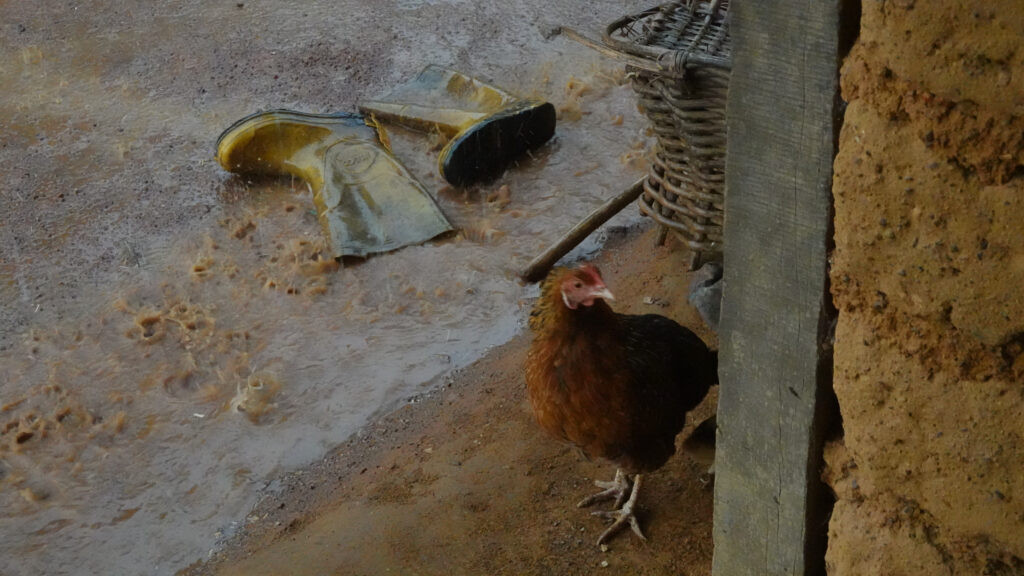
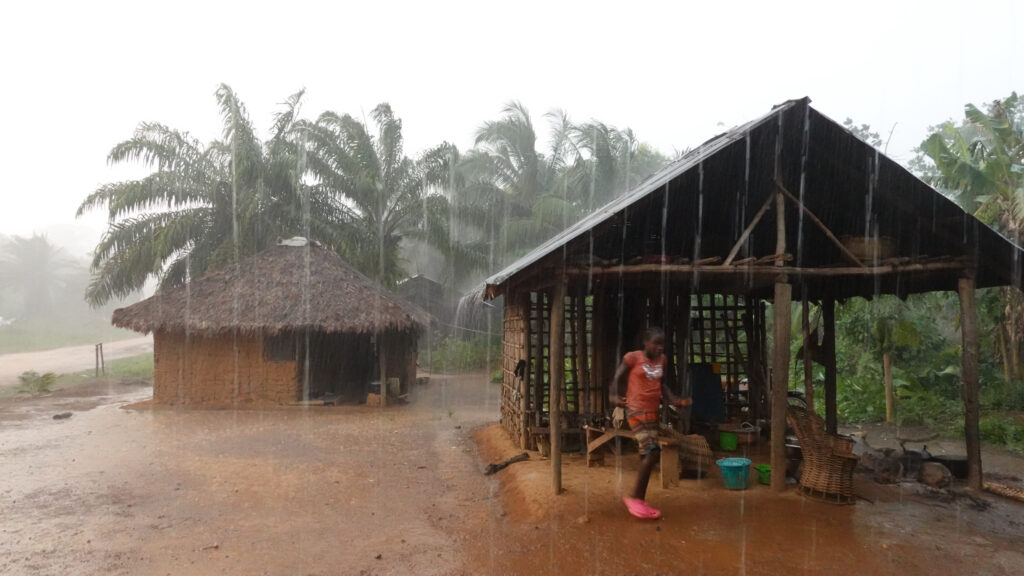
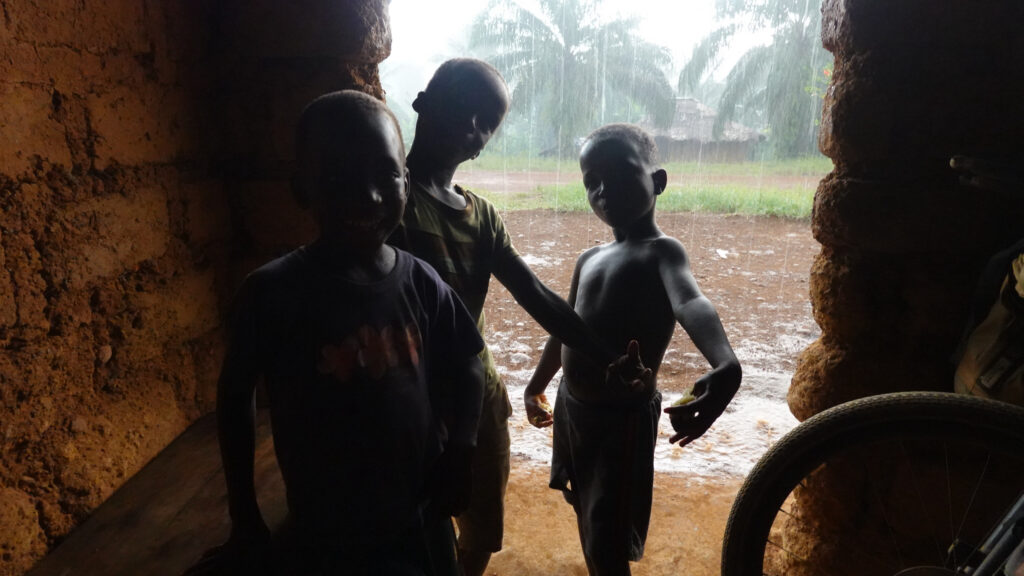
That same afternoon, the rain pours down, as a taste of the rainy season that awaits further ahead. We sit in Martha's house, together with a lot of children, and look out at the violent stream of water that washes vertically down from the sky. If Marie hadn't crashed, we would have been out in the middle of the muddy road right now, soaked to the skin, with no possibility of camping.
In the evening, the rain stops as quickly as it started and the last golden rays of the sun glint in every leaf in the fresh green rainforest.
We experience that duality every day in Africa. Every day something bad happens. And every day something good happens. The contrasts are stretched far out.
Death in the jungle
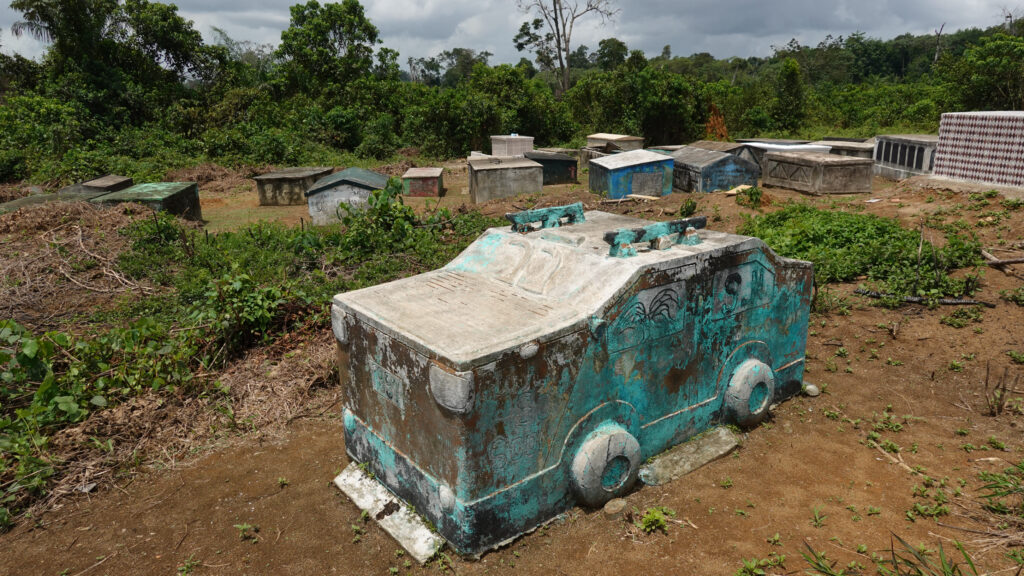
The next day we wake up again to the plaintive cries of women. We think that there was also a man in this village who died in the mine. But Martha tells us that the women are crying over another young man who died of illness. We ask more about what kind of illness it was and Martha goes on to tell us that the young man had crashed on his motorcycle (this happens often) and had sustained a large wound. The wound had not been treated properly and he died from it.
We just had to swallow an extra time, to put what Martha told into perspective. An ordinary young man dies of untreated wounds. Imagine if it happened in Denmark. It says something about how rough the people in the jungle live. That one does not necessarily have access to hospital and treatment. That you run the risk of dying simply because you have a wound.
The young man's mother came to us in the morning and wished us a safe journey before saying: “My son is dead. We bury him today. The men are preparing the grave in the village cemetery”.
Life and death are more closely linked here in Africa. Even though the tragedy is violent, we experience in the way it is handled that it is not unusual for someone to pass away.
Drowned in mud
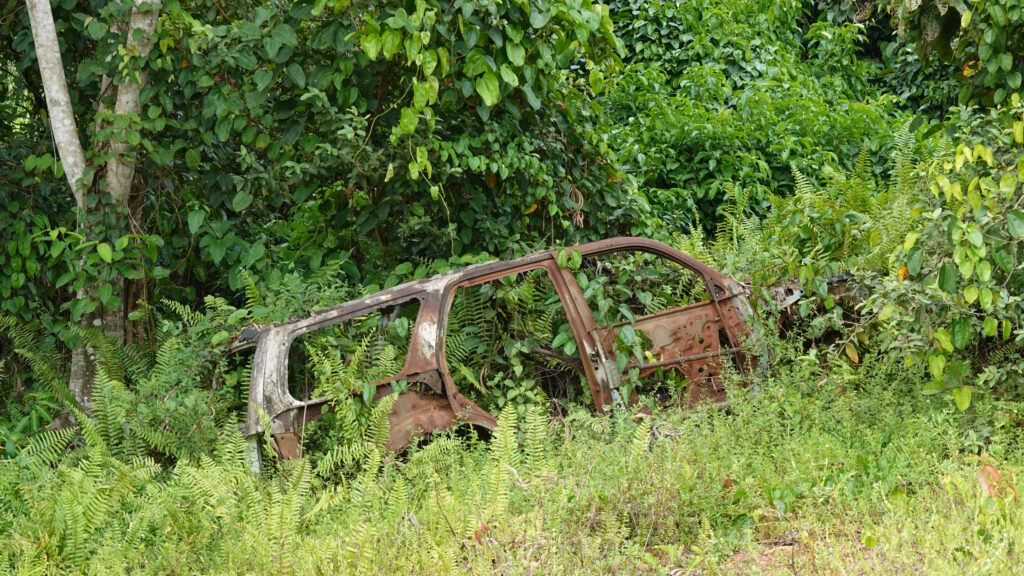
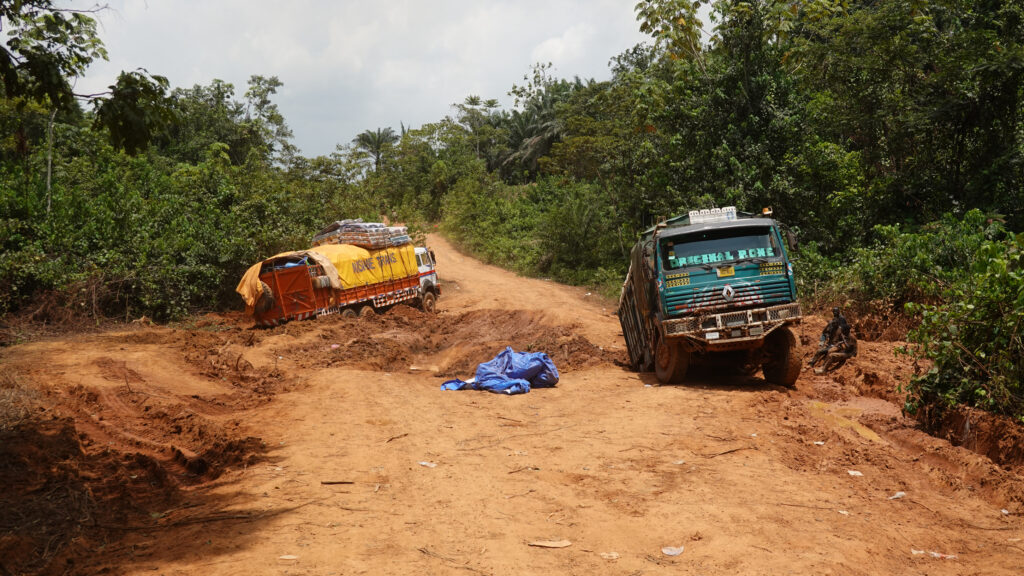
The day after the rain, the red dirt road had become even more challenging. Especially for trucks. Two large trucks were stuck in a giant mud hole. They had both been there since yesterday. They had to spend the night in the middle of the jungle. There are always 4-5 men to drive a truck. We're not quite sure why, but it's certainly an advantage when trying to dig yourself out of a mud hole. Both trucks were fairly free of mud, but were still in such deep holes that they could not get out. They had to wait for another truck to pull them up.
Marie felt sorry for the stranded men, glistening with sweat in the baking sun as they dug mud under the wheels, so she gave them a packet of large, delicious cookies. Kenneth stood for a long time and looked enviously at the lost calories.
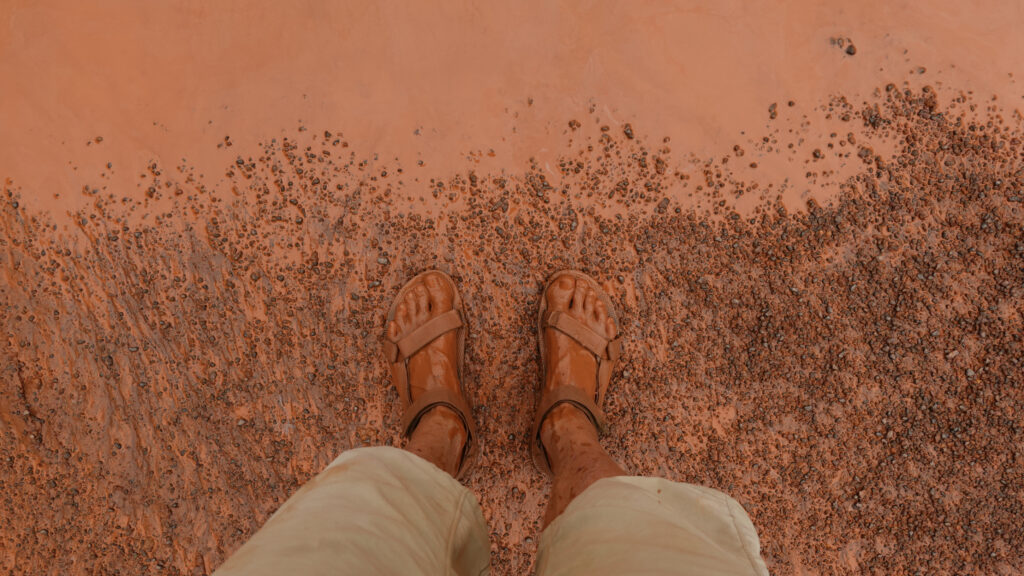
On our bikes we can sneak around most mud holes better, but at one point Kenneth misjudged the depth of a rut and got both wheel hubs, the crankcase and his feet dipped in the red soup das. It was not the last time during the day and several times we skated around in the slippery sandals while pulling and pushing the bikes up and down mud slopes and makeshift bridges of thick branches.
Sweaty drum dance
At one point we hear insistent drum beats in the distance. As we get closer, we see some young men standing on the side of the road and waving at us.
“Come along, come along. Take your camera with you" they say as we put the bikes down. It's all hectic and the young men are eager. We wonder if it's a trap to get us away from the bikes, but quickly follow anyway.
They lead us over a small embankment to where the drumming is coming from. We were completely unprepared for the sight that met us.
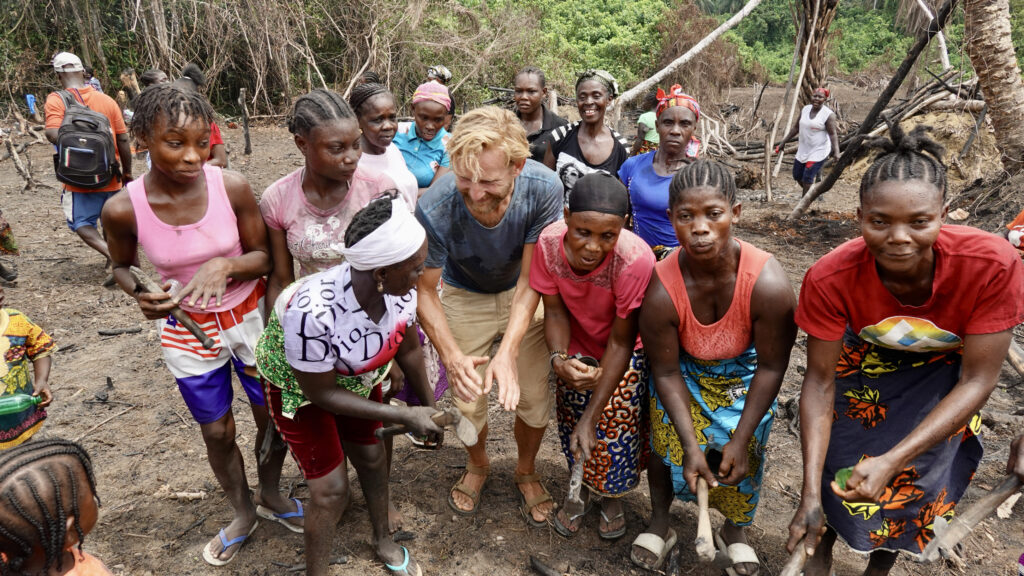
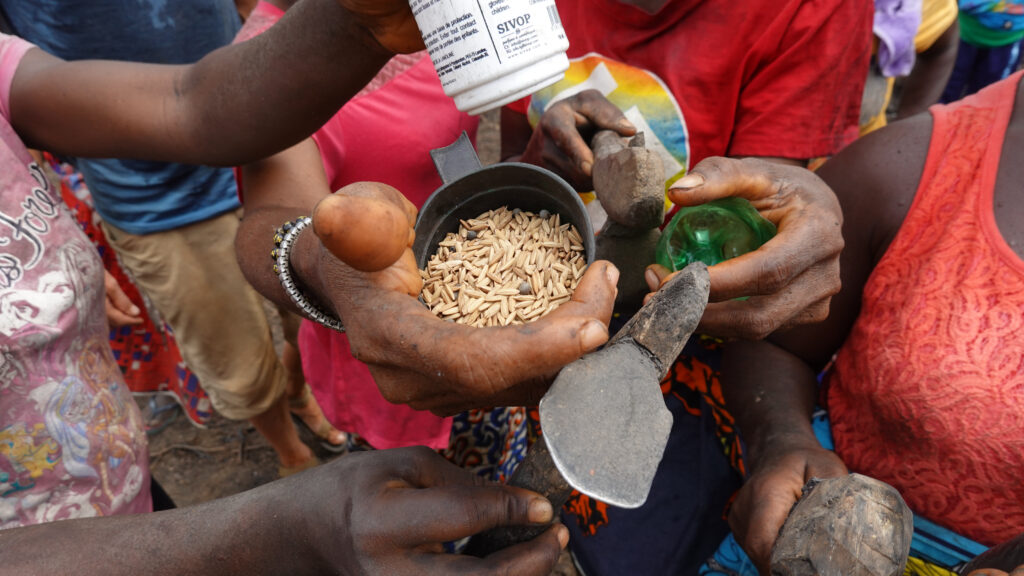
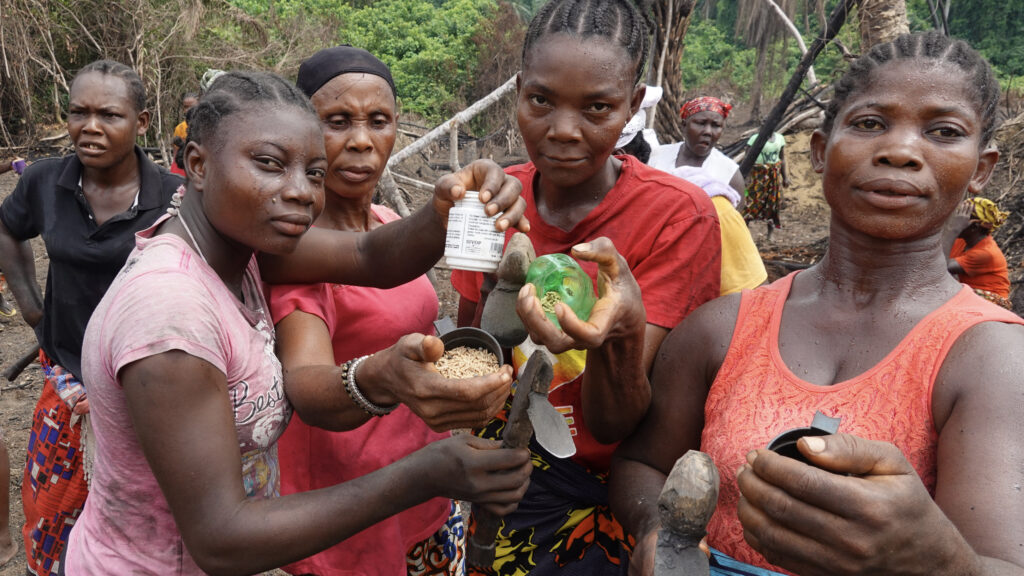
In a huge burnt area in the jungle, we see 40-50 women dancing to the fast drum rhythms, while one of the women shouts some words that the others repeat in unison. The women dance completely bent over while frantically hammering the ground with a small hoe. Sweat is pouring off their faces. When they have dug a hole in the soil, they throw in a grain of rice.
When we arrive in the field, we are immediately picked up by some of the dancing women, who lead us by the hand into the middle of the inferno. Marie gets a stick in her hand to poke at the ground with. Kenneth has to settle for focusing on delicious dance moves, together with the women around.
On a huge fallen tree in the middle of it all, 5 men are sitting, each with their own drum. They provide the fast rhythms to which people dance. The dance steps take place very low to the ground and with fast movements. A woman makes eye contact with Kenneth and a dance develops between them. The woman dances towards Kenneth. The drummers pick up the dance and intensify the rhythm. Everyone turns their eyes to the dance stage. Kenneth and the woman approach each other, right down to their knees and when they are close together the woman dances on her side and raises her arms, the drums build up, Kenneth and the woman butt together in the climax of the drums and everyone cheers and claps and laughs. The women gather around us with sweaty faces after the hard work. There is an intense atmosphere. They show their tools and their rice and we begin to understand what is going on. It is the annual ceremony for planting rice. It's a huge celebration and everyone is in high spirits. One of the women shouts a loud slogan again, and all the women, who are now standing in a ring around us, respond loudly in unison. Wow – how powerful.
We are happy in that moment. Happy to experience such a special ceremony. A tradition that we can feel runs very deep.
We thank everyone for being allowed to be a part of it, and everyone thanks us for participating. It is also a special thing we have only encountered in Africa, to be thanked for visiting people. But it is wonderful to feel that it is a mutual meeting.
The rest of the day we drive constantly and talk about what we experienced. How grateful we are.
The vile beasts of the jungle
We probably didn't agree on how many and how dangerous animals we wanted to see in the jungle. Let's just say that Kenneth had probably hoped for a little more, Marie for as few as possible.
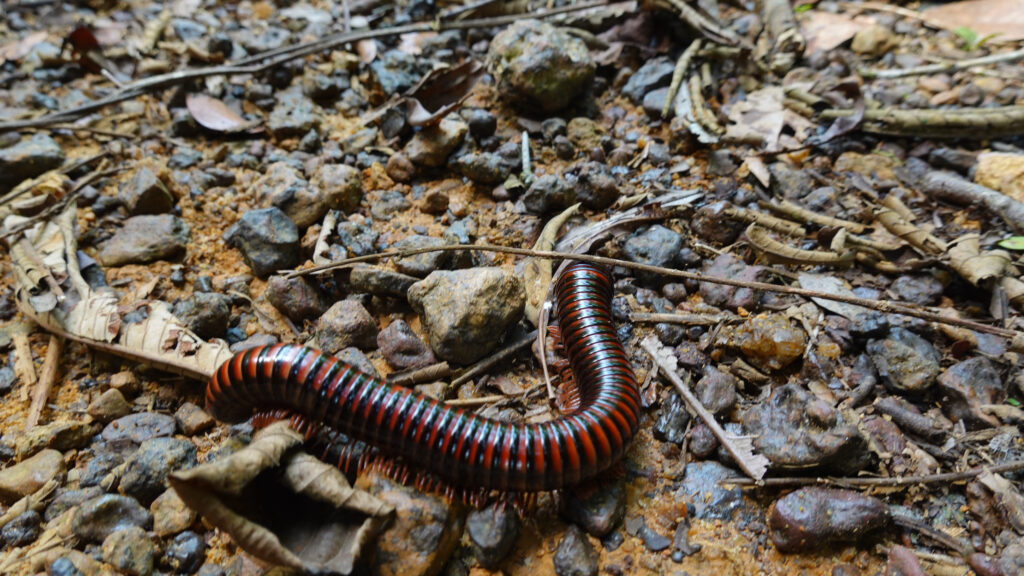
We didn't see any decidedly dangerous animals at all. But we met the king of the jungle by meanness. The ant.
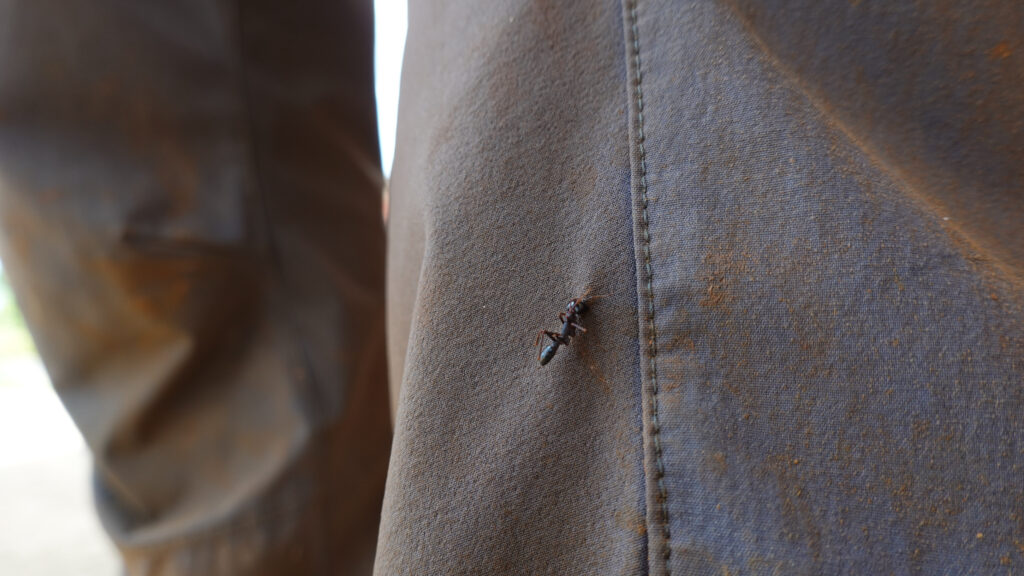
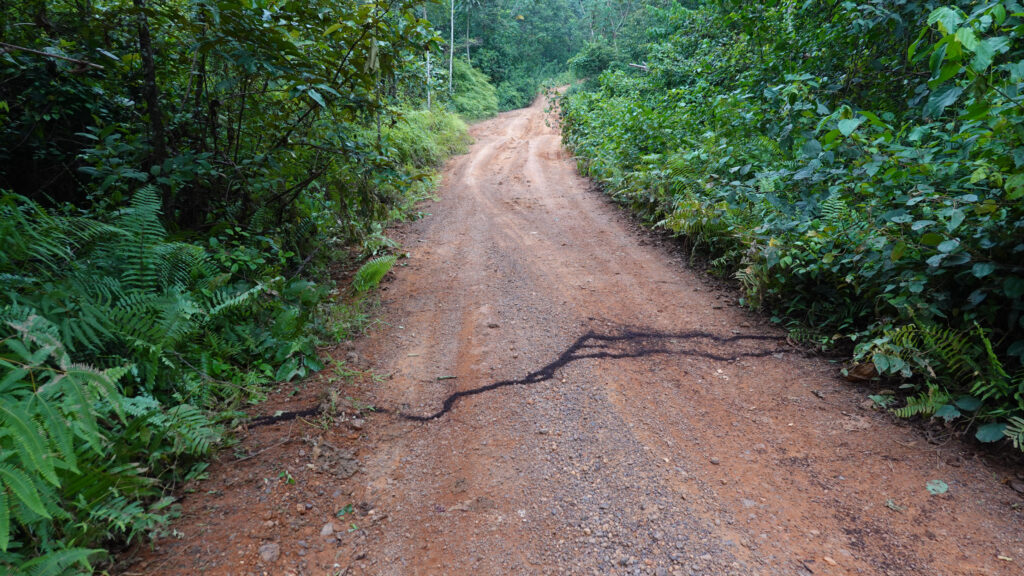
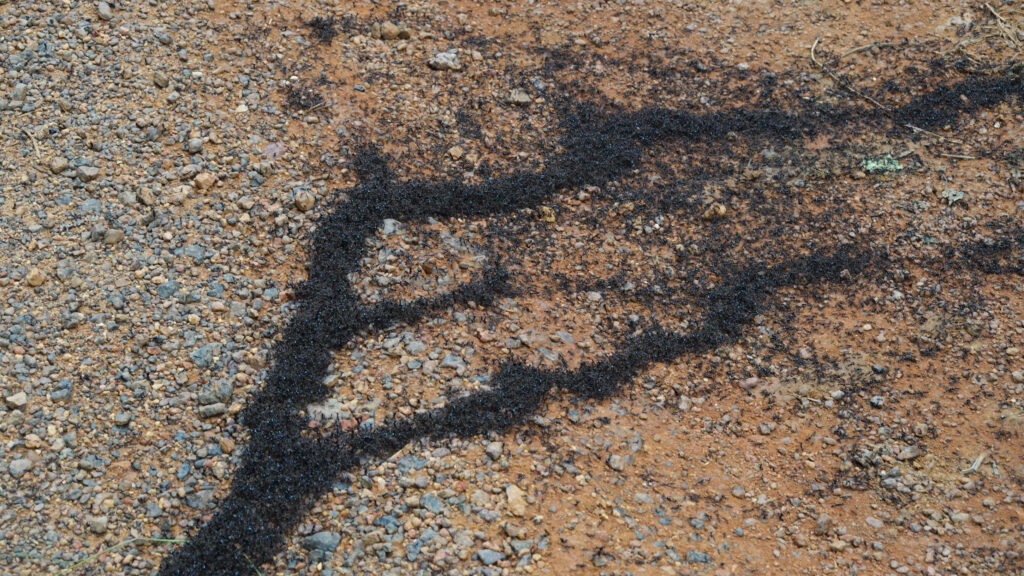
Then you might think - what could be despicable about a small ant. And let's just start here, because the ants in the jungle are certainly not small. They are between 2 and 3 cm long! It's a huge mess. And they never work alone – always in a group. Of course, it makes them fun to photograph, so when we saw a million ants blocking the road, we stopped for a moment to take a picture.
Afterwards we carried the bikes across the small river of ants so they wouldn't crawl around on the bikes. But caution helped just as much, because one had been quick enough to rush onto Marie's sandal. Here they tend to get stuck under the belt. And when they get stuck - they bite. And they bite juicy hard! Like a wasp sting that goes on and on, because they don't let go. Marie probably can't help but let out a panicked scream as she tries to balance the bike with one hand and knock the despicable creep out of the sandal with the other. But the ant, as I said, won't let go, so only when Marie got the sandal off, after a painful struggle, was she able to rip the ant out of its firm bite in the thin skin of the foot.
A few days later there was another ant on its way to attack. But it was not so clever, because it crawled up the outside of Marie's trouser leg. Realizing its mistake, it didn't bother to climb back down, but decided to try the direct route, into the fabric. It succeeded in cutting a hole in the trouser leg so that it could get through with its head, but now its back was stuck in the fabric. It was a bit of a difficult situation for the ant, because now it could neither come forward nor back, and it therefore had to end its days with a vengeful death, as compensation for the evil of its fellow species.
A night with narcotics officers
On the seventh day in the jungle we arrived at Barclayville. A slightly bigger town where we could get fresh supplies. Already at the beginning of the town we found a well where we got water. When we arrived a teenage girl was pumping, but she was so startled to see us that she dropped everything she had in her hands and ran home to her mother. The mother came out of the house and let us pump water, with a smile on her face. Gradually the girl also ventured out again.
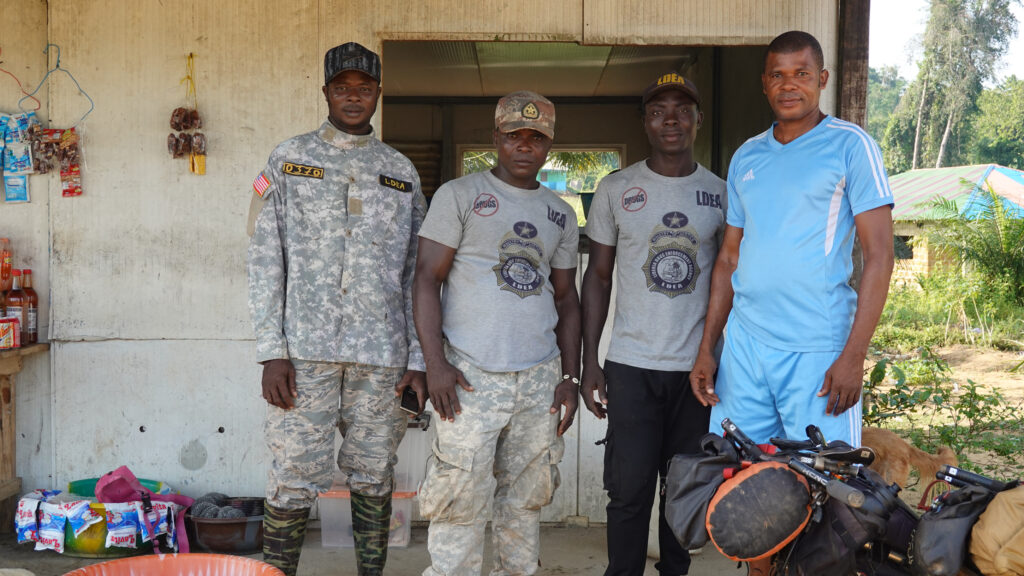
When we had filled our water bags, a man on a motorcycle stopped and asked where we were going to sleep tonight. We replied that we were looking for a place to pitch the tent and he said he was an officer and we could sleep at the station. We followed him, reminding each other of the story we've heard where a cyclist was locked up by the police who demanded all her money!
The guy led us to some dilapidated barracks where the big UN stickers had been scraped off. The region's drug officers live here.
The motorcycle man introduced us to the boss, whom he called Big Boss. However, he was somewhat cooler in his reception. The atmosphere was not the best. After the motorcycle man presented his proposal that we could pitch our tent between the barracks, Big Boss asked us to sit down. Kenneth sat down. Marie just had to fix something on the bike. Big Boss silently and measuredly watched the dirty biker sitting across from him for some time. He then explained that he was only "Second Big Boss" and that he should call Big Big Boss to discuss the situation. Kenneth leaned forward and pointed over his shoulder at Marie as he said: "I completely understand. I am also Second Boss”. He screamed with laughter and slapped his thighs, shook Kenneth's hand, and the ice was broken. The phone call was a formality and we were allowed to pitch the tent wherever we wanted.
Water was fetched for us so that we could bathe and wash clothes. Chairs were put out so we could sit in the shade. As evening fell Big Big Boss came. He wasn't so talkative, but did say that they had an operation going on last night, where they were looking for drug smugglers in the jungle. So as he sat and got a few small bottles to fortify himself, his phones glowed and orders were issued.
We went to bed and enjoyed the silence.
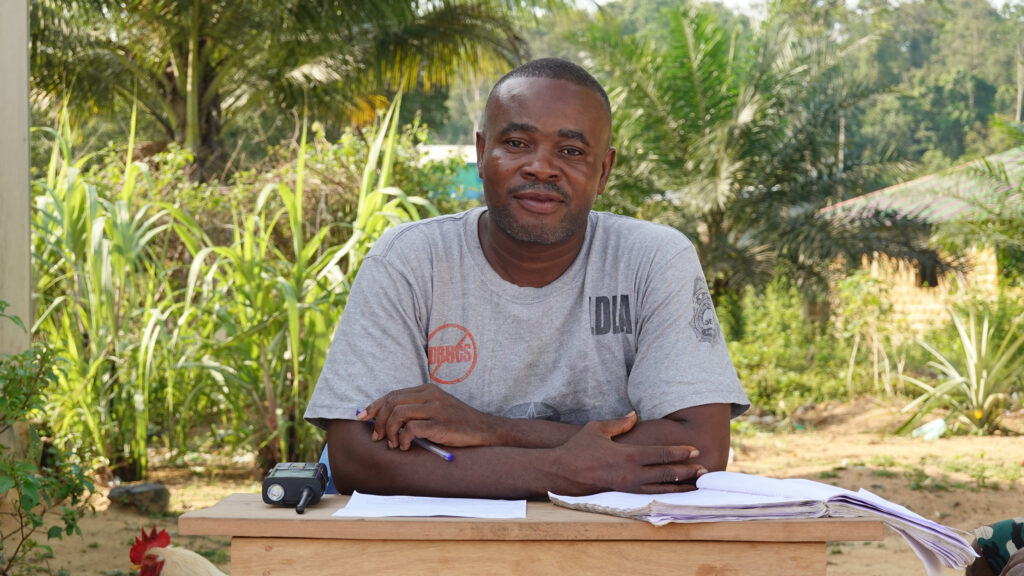
The next morning when we opened the tent, three new officers came to us. They said they had been in action all night. We asked if they had caught any "bad guys"? One pointed to a chair in the shadows, where a shaggy young man was sitting in handcuffs. It turned out to be an informant who had crossed the line and he was now brought in for questioning and possibly imprisonment.
While we ate breakfast, we could follow the preparations for the interrogation, which all took place outdoors at the barracks. Between chickens and dogs, crying children and pregnant wives, one of the higher-ranking officers adjusted himself on a stool, behind a low wooden table. The young man in handcuffs in a yellow plastic chair next door.
We quietly listed past, but the questioning was interrupted by curiosity about our trip. The officers asked where we were from, how far we were going, etc. We told the story and everyone, including the arrested young man, smiled and laughed and said “Wow!”. Finally we asked if we could take photos before we left. We had to.
Kola nut and smoke wine
The end of our trip through the jungle was in the small coastal town of Harper, which would also mark the end of Liberia.
But the evening before we got that far, we asked at a small well if we could pitch the tent at the school nearby.
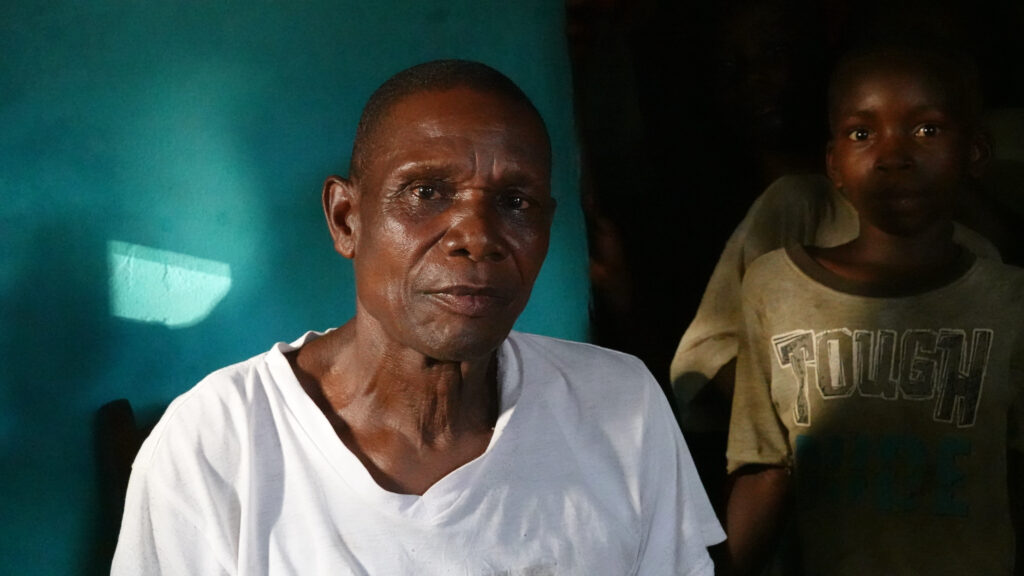
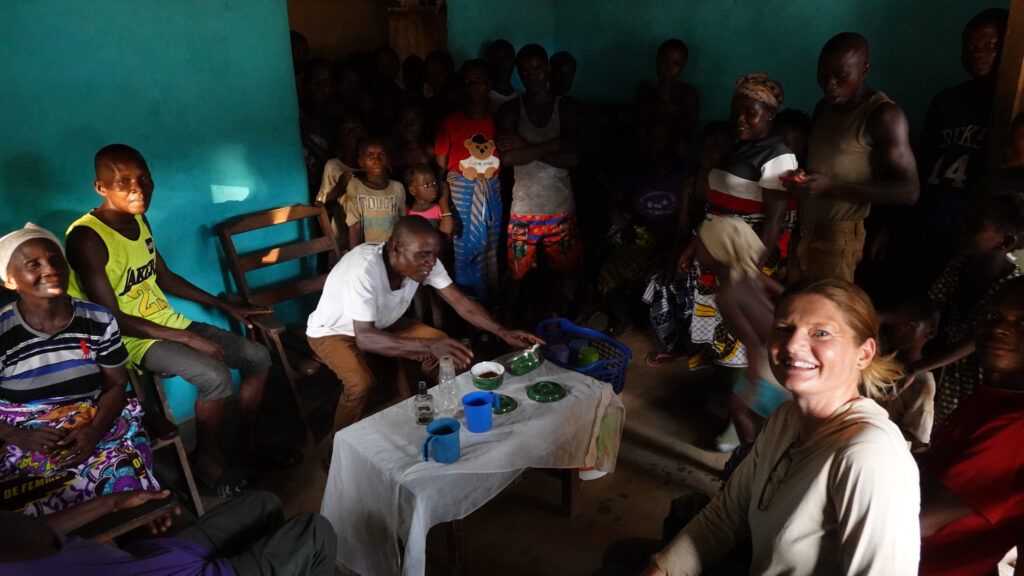
The woman explained to us that we should speak to the village chief. We know this is the normal way to ask permission, but here there were only a few houses by the road, and the school looked inviting. On the other hand, she was nice and wanted to accompany us to the chief. We started walking with her and soon discovered that the village was huge and spread far into the jungle. It was quite cozy and people greeted us kindly when we went with the woman. Some began to walk with us to the chief. When we reached his house we were shown inside. Everyone in our party joined us into the small hall where the chief sat. We were asked to sit. People came in and there was a bit of moving around in terms of rank and age as people came in. Many stood up along the walls, and those for whom there was no room stood outside and looked in through the windows. We were probably 20 people in 12 square meters.
A young fellow who had followed us began to explain to the chief our desire for a place to pitch the tent for the night. We do not understand the local tribal language but tried to supplement. If only to show positive energy and kindness. The chief welcomed our inquiry, but first said that the tradition dictates that when guests arrive, the chief shows his hospitality by breaking a kola nut and sharing it with the guests.
A kola nut was retrieved, along with chili powder and water. The nut was cut into pieces. The chief took the first piece. A few others from the tribe also ate. When there were two left, we each took a piece, dipped it in chili, and started eating. The kola nut is very bitter and dry in the mouth. But the chili is a bit mouth-watering. However, it is impossible to eat without washing it down with water. The chief looked satisfied, but we really think that, despite the traditions having to be observed, he was probably significantly more excited about the second part of the ritual. Namely to open a brandy, which was also offered to everyone. He himself took a large shot glass as the first. Then we were offered "smoke wine". It is a brandy that is made from sugar cane and therefore tastes a little smoky. Marie took the first sip and caused huge roars of laughter as her whole face contorted into a grimace. It only helped a little when she tried to say it tasted good. It was a grimace that cannot lie.
Kenneth also got a shot with associated grimace and burnt throat tube.
Thus the pact was sealed. We were recognized. With solemn speeches from all sides, it was agreed that we should spend the night in the tent, in the town square.
While we were setting up the tent, 30 people were gathered and eagerly followed along in assembling the tent, inflating air mattresses, etc. They even filmed and took pictures of the entire session.
When the tent was ready, rows of chairs were set out so that people could follow how the evening would unfold for such a few white people in a tent.
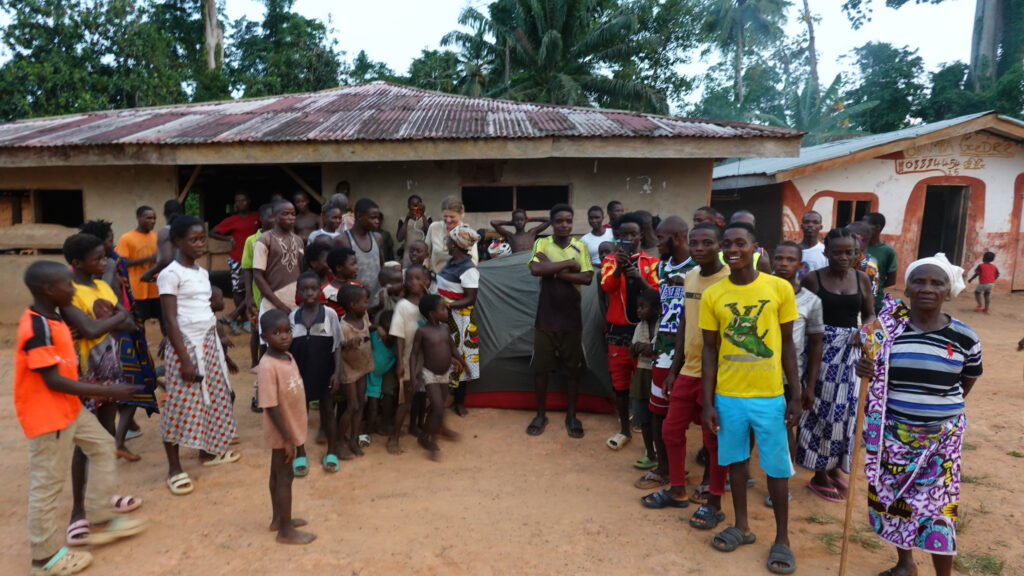
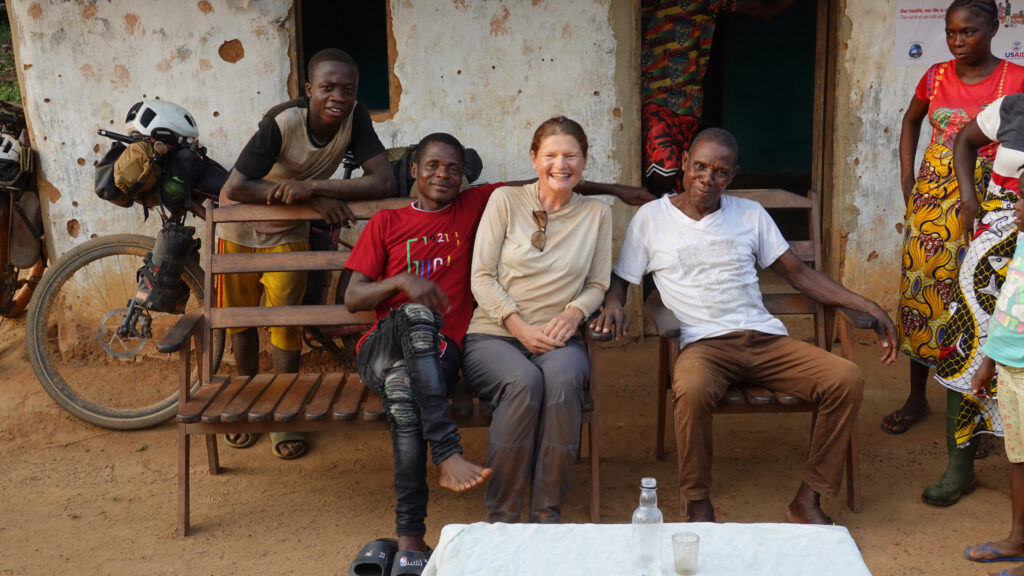
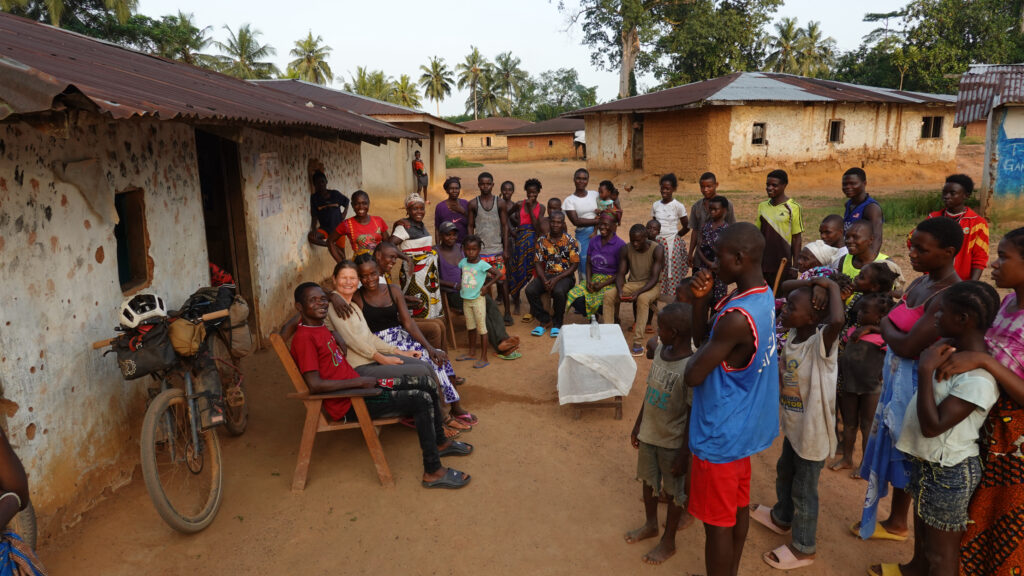
A motorcycle drove into the square and two men got off. One, Ferguson, offered after a few courtesies that we could sleep in his brother's house. His brother is one of the village's 16 elders and thus important. We told them that we had already been offered shelter by the chief, but that it was fine enough for us with the tent. Ferguson understood the dilemma and very politely explained to us that we were making amber in it. He understood that we would not be a trouble. But the village is not at all used to white people coming, and it will be a bit strange for everyone if we slept in a tent on the square. Tradition dictates that the chief and village elders must ensure that travelers have a place to sleep and that all their needs are met.
A little embarrassed, we apologized for our misguided consideration and agreed to stay with Ferguson's brother, Robert. The tent was packed up and we followed it to Robert's house.
Here we started all over again with kola nut and brandy, while the women boiled water for us over the fireplace so that we could have a hot bath under the starry sky. After bathing, they served us food in the room that had been arranged for us. We were super grateful for the great hospitality.
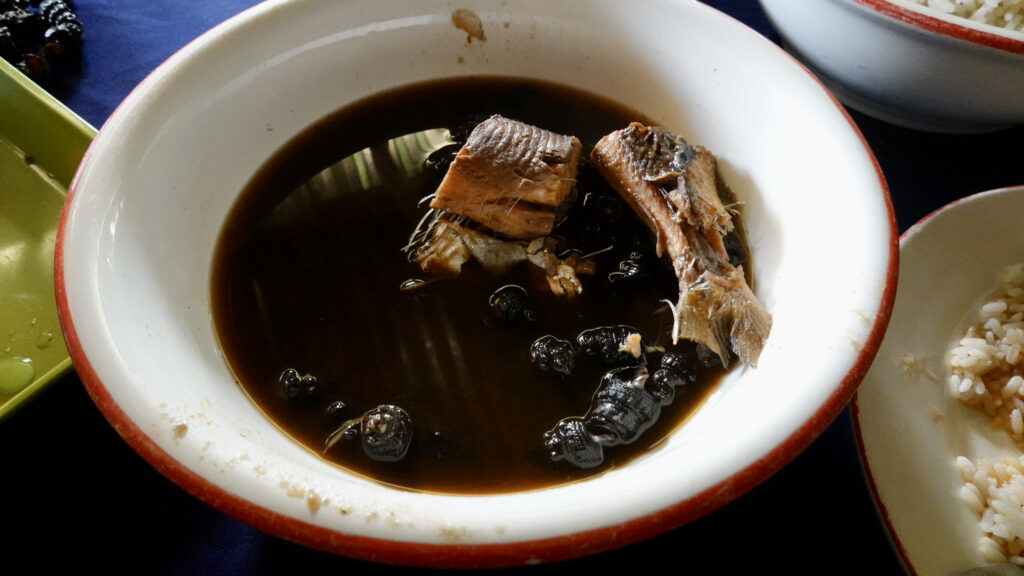
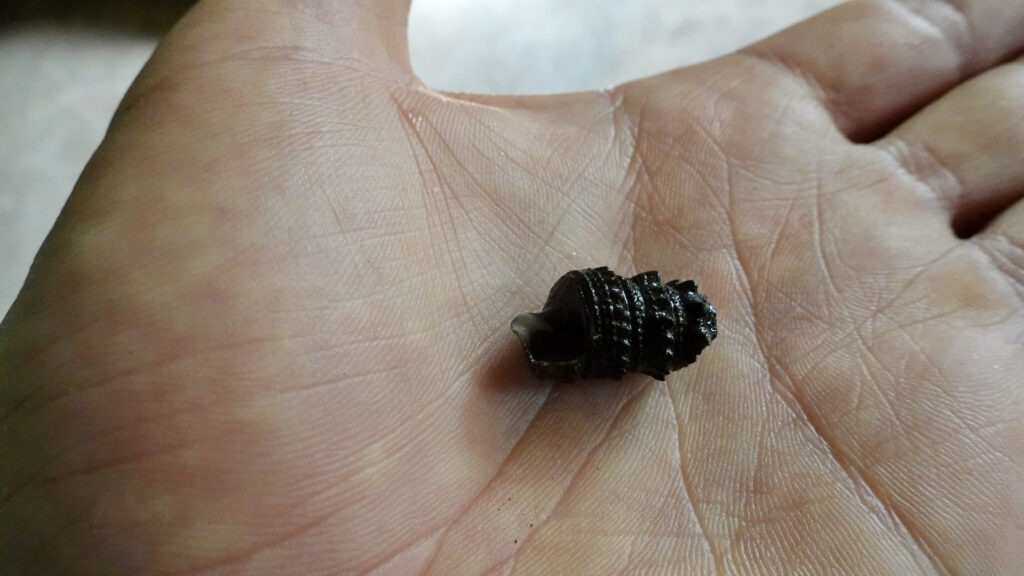
The next morning the women had made breakfast for us. A local specialty: Snail soup! They have harvested the snails themselves down in the river. You put the snail shell to your mouth and suck the soft animal out with a big swish. Again everyone laughed loudly as Kenneth boarded the snails and tried to suck them out, with many failed attempts and few successes. Marie skipped this time.
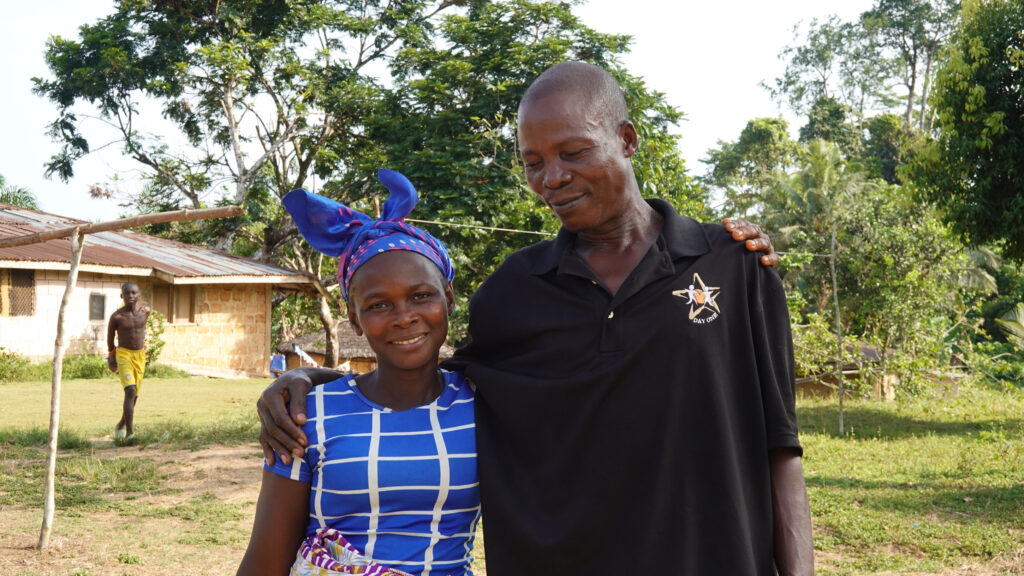
With snails in our stomachs and smiles on our faces, we said goodbye to our host family. Once again we felt lucky to get so close to the everyday life of ordinary people who still live completely traditionally.
An adventurous end to Liberia
At the end of our jungle adventure, we rolled into Harper and checked into a small guesthouse.
It was completely blissful to be able to lie down in a soft bed and let all the impressions play again, for the inner gaze. To let the experiences sink in.
In a way, it is completely incomprehensible to us how harsh life is for many in Liberia. But it is also beautiful. The smiles, the closeness, the dancing and the joy that we have experienced are what fills the most. At least for us. But it also seems that the joy of life is the most for the cool people who live their whole lives here.