
On a cold January 4, 2017, Pia Flores sat and watched Go' Morgen Damark when she was visiting her homeland. After she saw the feature about two lunatics who wanted to cycle the length of America, she wrote to them: 'You must finally write when you get to Guatemala City, and I'll give you a cup of coffee'.
Of course, we were delighted and responded with many thanks, but at the time Guatemala seemed incredibly far away. But whupti and approx. 15,500 km. later we were in Guatemala.
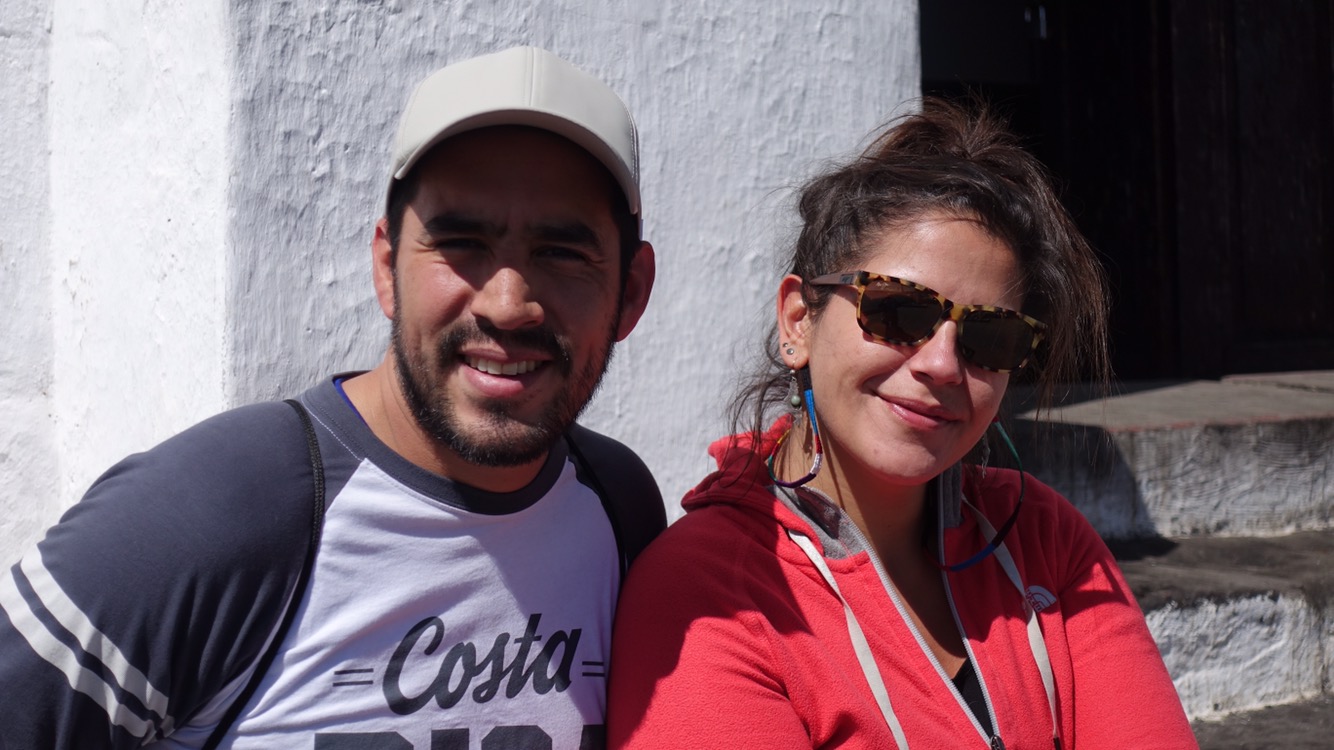
The coffee lasted five days with Pia, her Guatemalan husband Fernando and their cute former street dog Betty. A fantastic meeting with super nice and hospitable people who gave us some completely unique experiences in Guatemala and good conversations.
Pia is a trained anthropologist and now works for an independent newspaper as a journalist. Fernando is a trained psychologist and has his own practice. Both are knowledgeable, caring and giving people who fight for greater equality in society.
Pia and Fernando showed us their town. A city with approx. two million people, and which we previously almost only knew for its rough reputation. The city is divided into zones, and it is not just a geographical division of the city. They are also a predicate for where it is safe, dangerous, as well as where the rich and poor neighborhoods are. 'City of contrasts' Pia referred to Guatemala City as, one of the first days.
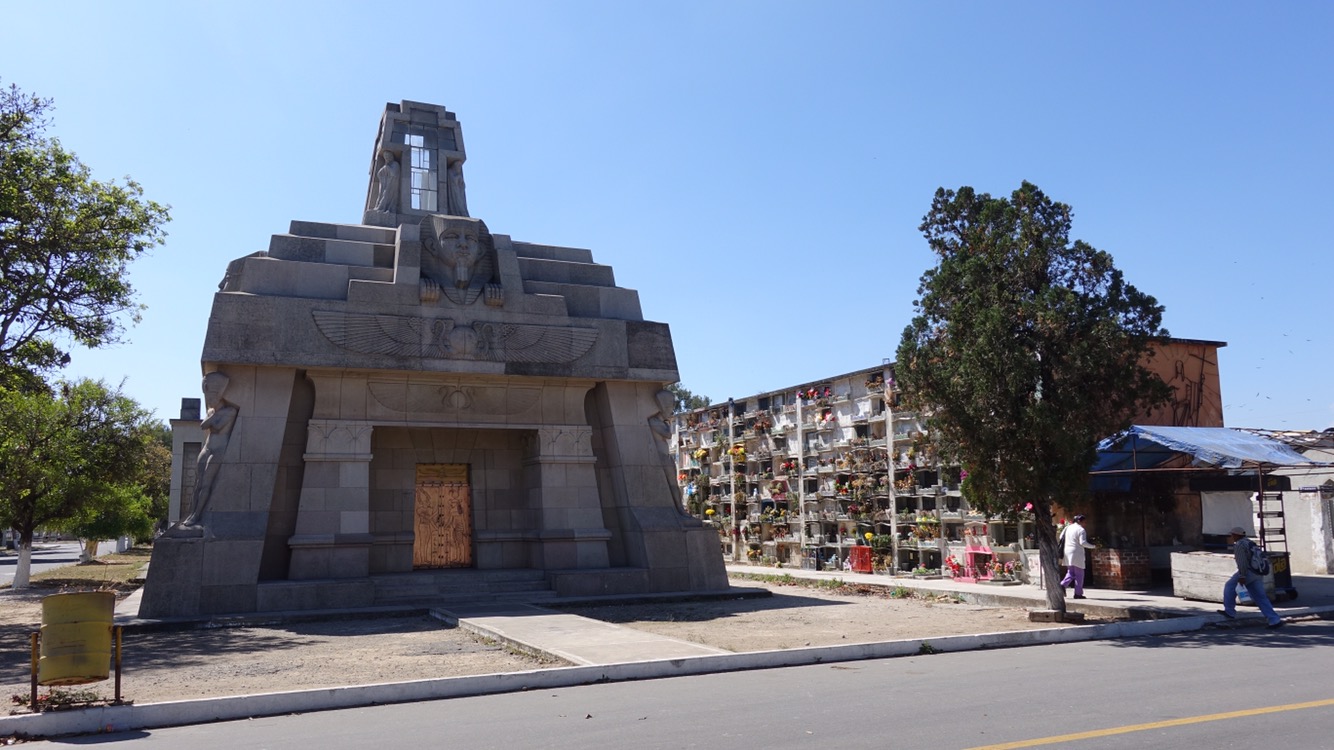
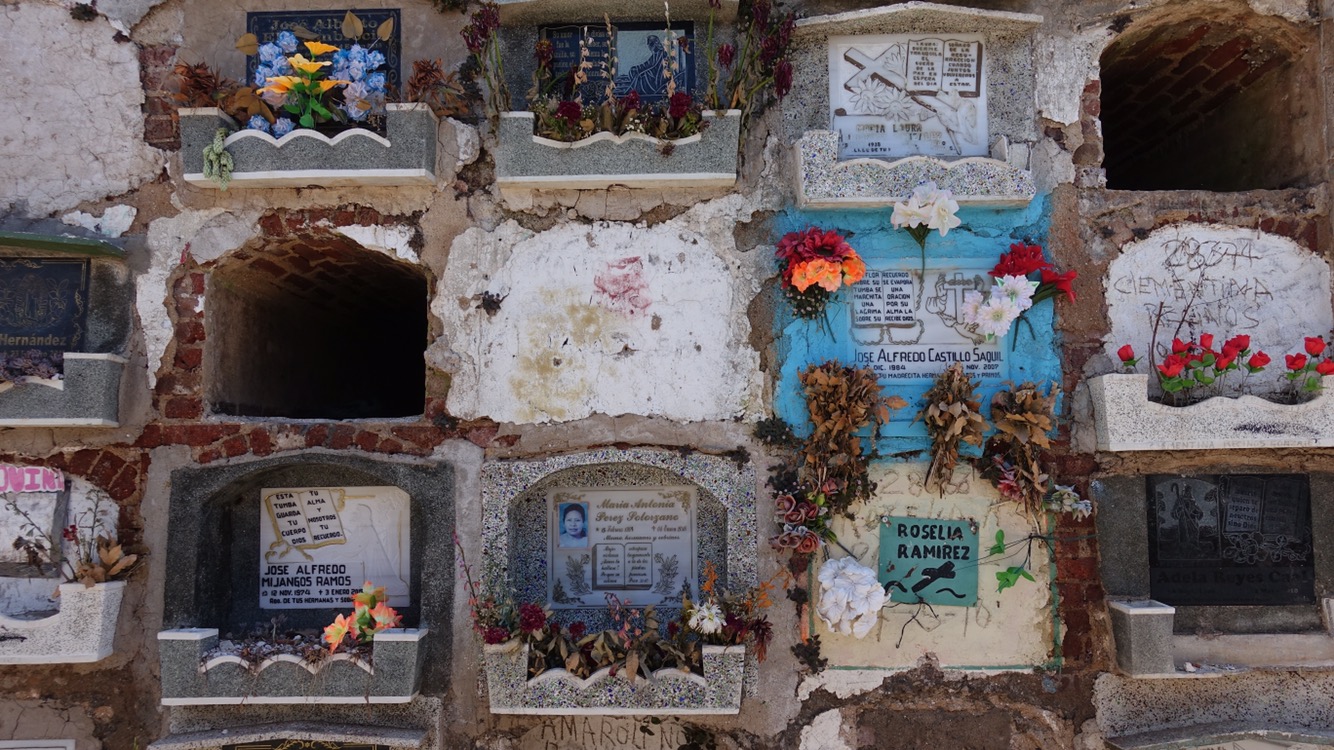
The public cemetery is part of the tour of the city. Something completely different from when you enter a Danish cemetery. 'Even death is unequal in Guatamala' Pia explained. She showed us how there were huge, pompous mausoleums owned by the richest families, versus at the back of the cemetery, where the city's poorest people are buried in a kind of high-rise with room for the coffins.
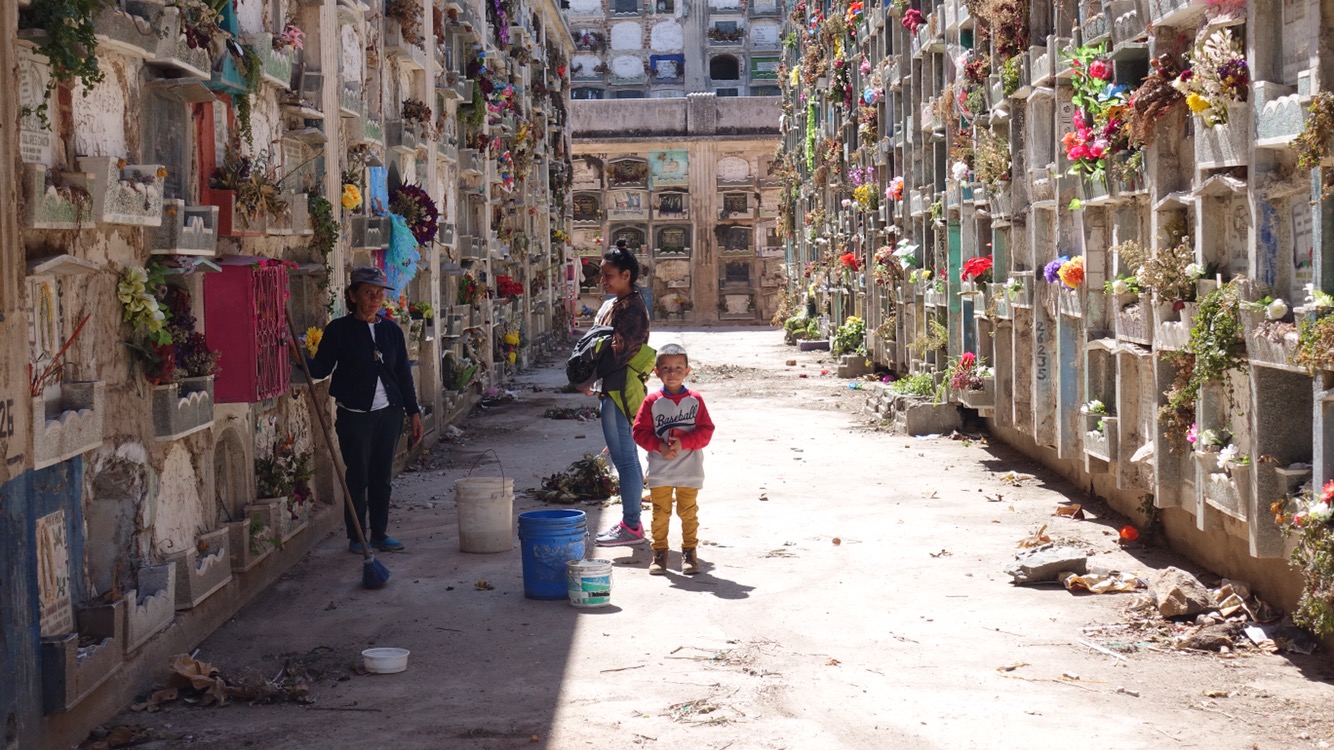
Ironically, it is at the back of the cemetery that is most interesting. Graves filled with flowers, memories, colors and people. A girl came cycling, a man was working on a grave and others were visiting with fresh flowers. Here, too, there is a division according to whether it is possible to buy a plaque with the dead person's name or whether it is a handwritten sign.
A huge cemetery that went on and on and on. Until we reached the cliff where some of the graves have collapsed and you shouldn't go too close to the edge. Where the landfill began. A huge landfill which reminded us of how much rubbish we humans produce and which confronted us with the great poverty in Guatemala. Some live in the dump, while others frantically look for something that can secure them the day's meal.
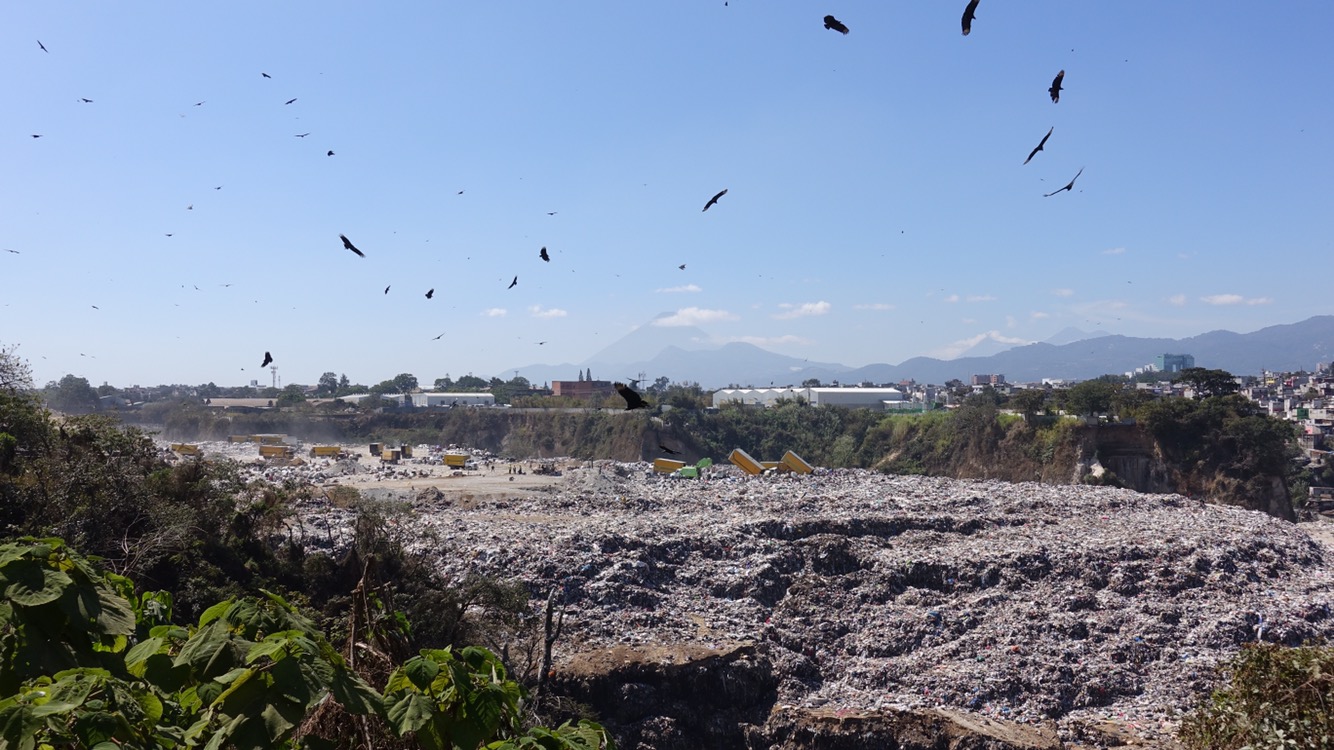
We wouldn't have gone to the cemetery ourselves, but we're glad Pia took us there. Both because it was beautiful and because it was a different way of gaining insight into society.
Another place we also wouldn't have found ourselves was the public washing area. A tradition that is found in fewer and fewer places in the city. We entered a courtyard of chattering ladies dressed in everything from traditional costumes to jeans and T-shirts. Everyone stood in a large circle around a pool of water and washed clothes. There were garlands hanging from the ceiling from Christmas and many of the women had decorated their washing area with flowers and other trinkets.
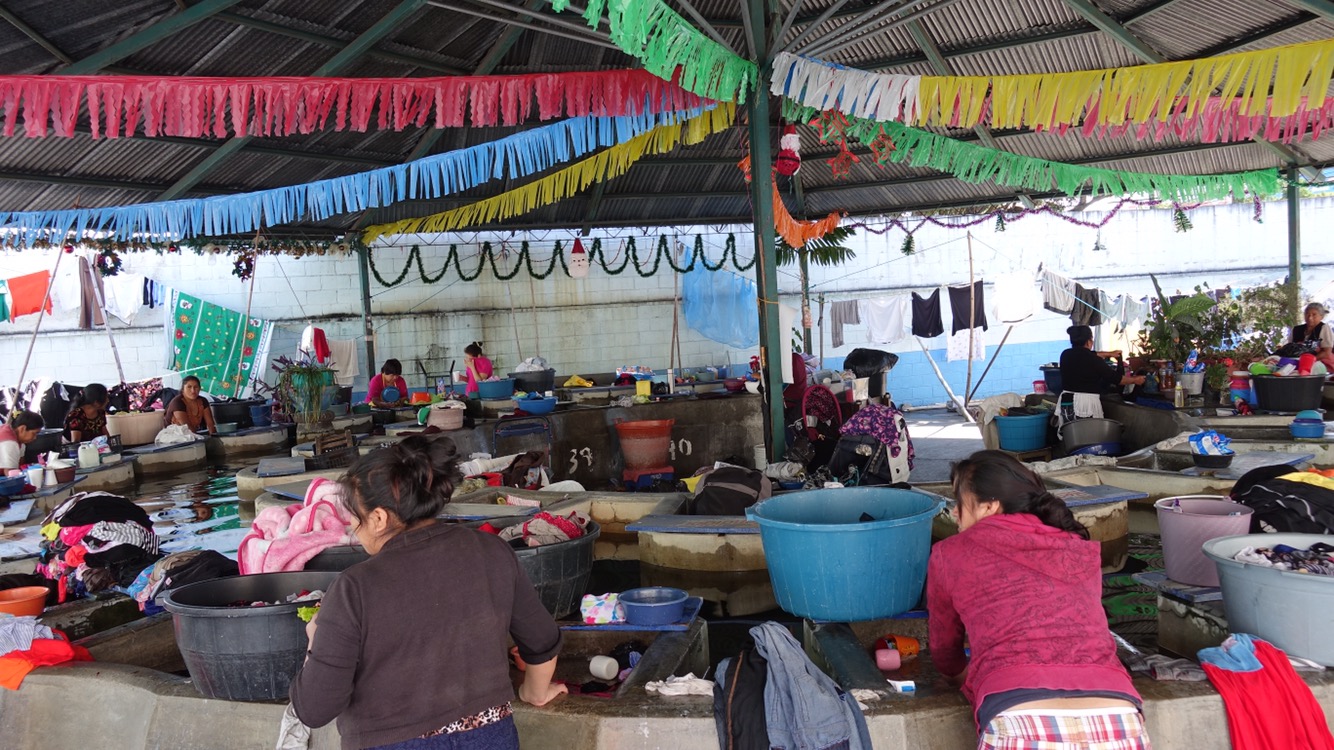
The women received us smiling and curiously asked where we came from. Children played and clothes were hung to dry depending on where the sun's rays hit or would hit as soon as possible. An insight into everyday life, a pocket of time and a piece of history. Very nice place and contrast to the fast city.
 .
.


Pia and Fernando also gave us an insight into the Mayan culture much more vividly than we could have read. The Mayan people had their heyday from approx. years 0 to 900, but the Mayan culture has survived and is still a large part of Guatemala today. The traditions are maintained, there are 22 different Mayan groupings, each with their own language, and it is one of the strongest Native American groups across the Americas. It is not always easy to be Maya in a modern world. Their profession is closely linked to agriculture in the mountains, which can have difficult conditions, and they have been largely excluded from political influence.

The San Simon temple in San Andres Itzapa is one of the places where the Mayans perform rituals and where the culture is strong and alive.
There are two different myths about how the saint San Simon arose. One myth is that he was a Catholic priest who was highly valued by the people because he helped those who needed it. In the opinion of the church, however, he was a little too happy to drink and smoke, so he was excommunicated. San Simon therefore built his own church, which became more popular than the Catholic Church. The Catholic power elite could not tolerate that, so the church was burned down. This only increased the goodwill towards San Simon, and he became a saint.
The second myth is less dramatic. It says it is a Spanish interpretation of the traveling Mayan shaman, Maximon. He had the same propensity for alcohol, but his many good deeds long outweighed his extravagant lifestyle.

Whether you believe the one myth or not, you go to the San Simon temple to pray, leave wishes on the wall and to be cleansed. The offerings often consist of alcohol, cigarettes, candles, but they can also be flowers, chicken and other whimsical things.
The cleansing takes place with a specific combination of herbs that is run over the body, sometimes with an egg and booze blown over the body. And the face - but we only saw that done to a tourist. Otherwise, people smoke and drink to honor San Simon. There is something more slapdash than in a Danish folk church.
 .
.

.
Another place where Mayan culture is strong is in the market village of Chichicastenango, which is the stronghold of Mayan-produced products, vegetables, fruit, beautiful Mayan costumes and finely woven fabric. Every Sunday there is a huge market that Pia and Fernando took us to.
 .
.

Chichicastenango is not just a market town. The city is known for holding its own against the Spanish and Catholicism during their invasion in the 16th century. The Catholics therefore built their churches on top of the most sacred thing the Mayans had. The city's sun and moon temple, which face each other. That was not enough to keep the Mayans from practicing their own faith. They performed rituals on the remains of the temple foundation outside the church. Then they entered the church and attended the Catholic sermon, which was commanded by law.
Today the religions have merged. The Mayans still carry out rituals outside the church, where they burn off some kind of resin, but also inside the church it is a fantastic mix with both ordinary Catholic decoration and Mayan altars on the floor with candles, which they often place with a candle in each corner of the world and one in the center.
 .
.

We were fortunate to experience a change in the brotherhood that looks after the church. Each brotherhood has a saint standing inside the church. A handsome figure dressed in an embroidered cloak with fringes, feathers, colors, promptness and splendor. The shift took place at full blast with cannon fire and procession through the city.
 .
.
 .
.

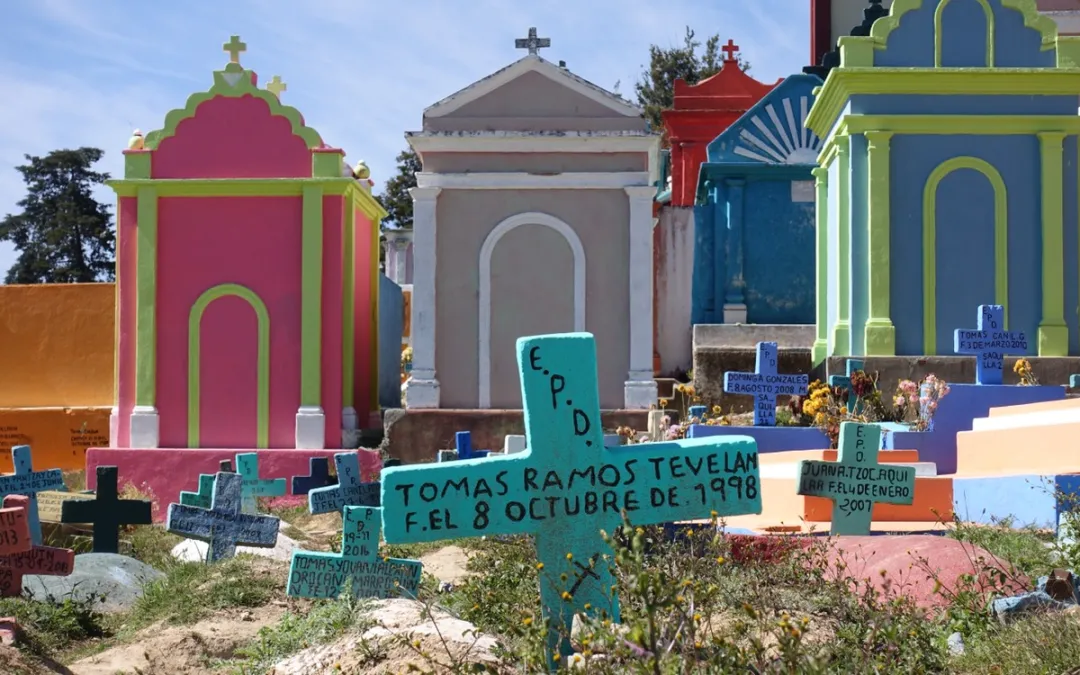
In Chichicastenango we also visited the cemetery, which is fantastically located on a small hilltop with a view of nature on one side and the city on the other. It was very special to enter the cemetery. A multitude of colors, magical calm and peace of mind in a relaxed way. Here it is also clearly seen how the Mayan religion and Catholicism have been mixed together over time.
It is allowed to go inside between the burial sites and there are altars to perform the Mayan rituals. A mixture of crosses and mausoleums, but painted in colors originating from the Mayan culture. The color is given to the grave site according to the day the person died, making the cemetery look like a large colorful bouquet of flowers. A very beautiful one of a kind. It's amazing what color can do to a place that is otherwise associated with great sadness.
 .
.
 .
.

In Denmark we also have class differences, but it can in no way be compared to Guatemala. From people dying of hunger to people flying to Miami on private jets for weekend shopping. The eight richest families can be traced back a long way, and they have since maintained power economically and politically. It is the extreme difference between rich and poor, as well as no possibility of mobility for a large part of the population, that helps to create the high rate of crime. There are many who see no other options and have nothing to lose. Over generations it has worked this way, changing the view of life and death, as well as what a life is worth.
Corruption at all levels, extortion and protection money collected by gangs, appalling poverty, undemocratic politics and the presence of an armed guard everywhere are commonplace in Guatemala. There is a part of the population that fights against the system, but it can be with life as an effort and exhausting. The feeling of repeatedly running up against a political system that closes in on itself and protects each other.

It makes us think once again how lucky we are in Denmark. Or maybe it's not luck, but because of ancestors who fought for democracy and a welfare system. The Constitution in 1849, which was the first step away from autocracy and towards a trust-based society led by Grundtvig. The co-operative movement, the struggle of the trade unions, the early equality, representative democracy where everyone has a voice and most importantly that corruption is not part of everyday life.
Everyone will never have the same thing, but we must stick to the desire to create welfare and a dignified life for everyone. By reducing inequality, we also reduce a large part of the problems that come with it, such as crime. There is a tendency for us to take it for granted that Denmark has a welfare system. It is dangerous, because it is a society that has been worked and fought for, and we must continue to work for it if we want to keep it.
If Guatemala is not already on your top five travel list, hurry up and get it written down. It is a beautiful and exciting country where we have only met nice people. A country with a great cultural heritage, and a great contrast from the indigenous people and their traditions to a modern Guatemala. It has been really interesting to get a deeper insight into Guatemala and the Mayan culture. Huge thanks to Pia and Fernando!
It has also made us want to learn more about our own ancestors. So it will be at the Viking museum when we get home. Unbelievable you have to go so far away to find out how exciting your own heritage and culture is.
 .
.
